PKCell AAA 850 mAh review
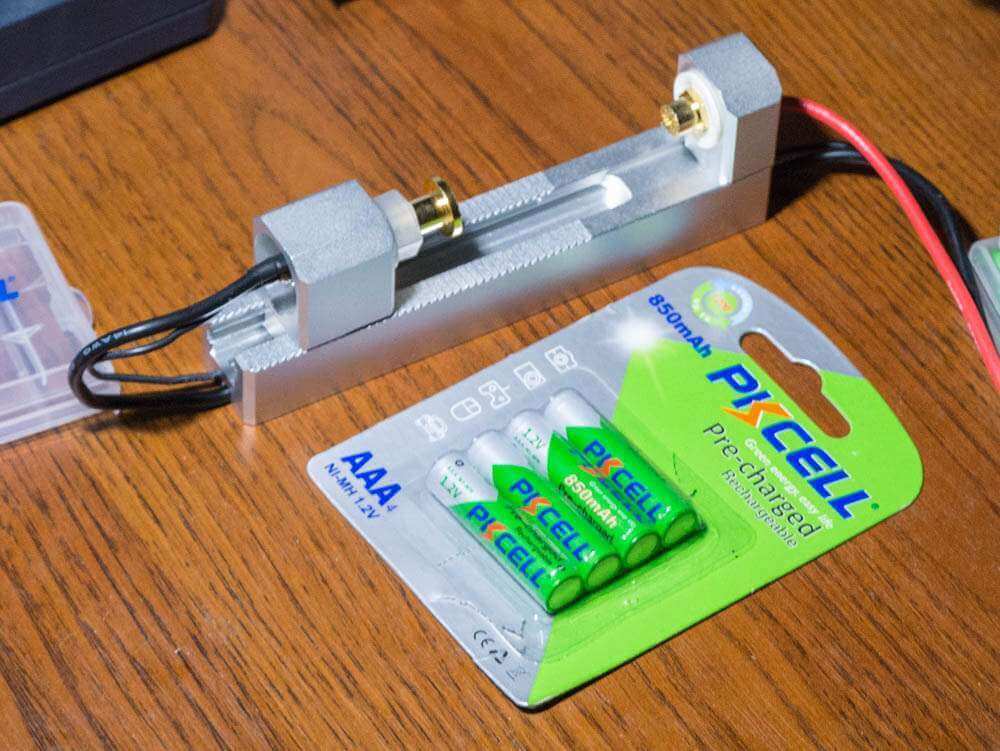
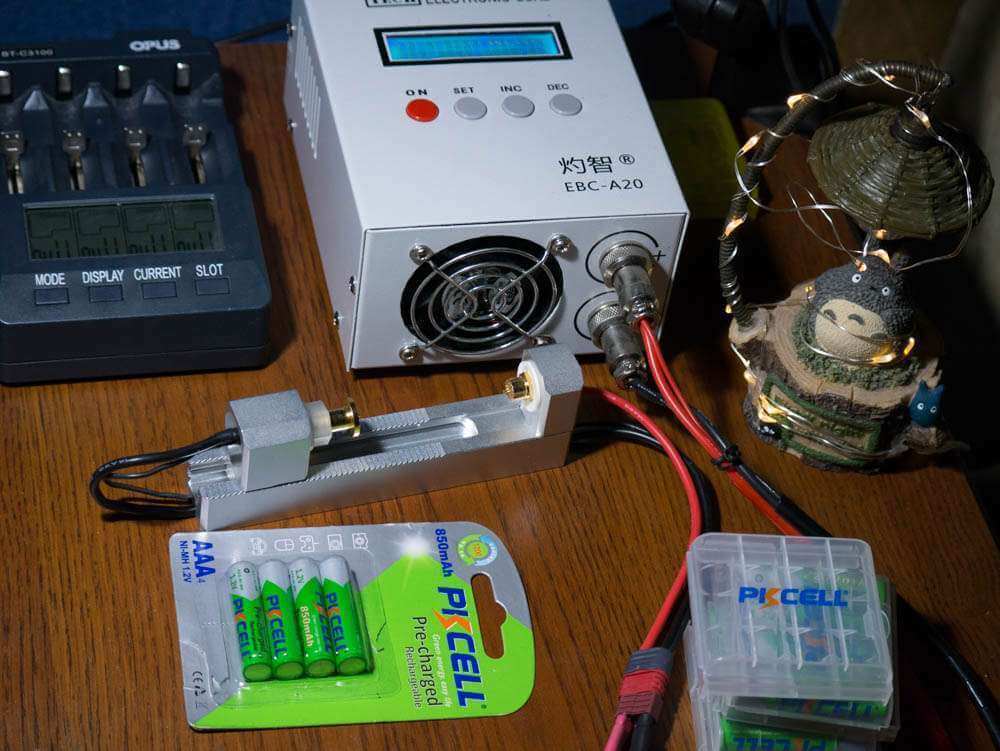
After the test of the excellent PKCell AA 2200 Ready to Use batteries, here's the promised review of the NiMH PKCell AAA 850. I ordered the batteries from the Pkcell Official Store on AliExpress, for myself. So, here's what we have:
- Rated voltage 1.2V;
- Rated capacity 850 mAh;
- Minimum capacity 790 mAh;
- Standard charge 0.1C (85 mA);
- Fast charge 0.3C (240 mA);
- Discharge threshold 1.0 V;
- Maximum discharge current 2400 mA;
- Storage temperature -20 ~ +35.
The measured internal resistance of the batteries was 62-107 mΩ. In the previous test the AA batteries managed decent results at high-current discharge, so I'll test these at 0.5, 1 and 2 amps.
But first let's find out how much charge the batteries have "out of the box", since the manufacturer claims they're "Ready to Use". We'll also see how the characteristics of batteries within one batch differ. The longest procedure lies ahead: we'll discharge the batteries one by one at 100 mA (that's the minimum current my electronic load supports).
PKCell AAA capacity "out of the box"
Discharged at 100 mA to 1V (the minimum voltage recommended by the manufacturer), the PKCell 850 showed the following results:
- 689 mAh.
- 704 mAh.
- 694 mAh.
- 685 mAh.
The capacity of four batteries from the same pack has a spread of 2.77%. That's an excellent result. The manufacturer says that after a year of storage the batteries should keep 80% of their charge, that is, 680 mAh. All the batteries checked have a charge above that value.
The average voltage during discharge at minimum current is 1.21V. Not an outstanding value, but quite acceptable.


PKCell 850 AAA discharge curve at 500 mA
The PKCell AAA 850 batteries are advertised as high-drain, so we won't waste time on low-current discharge and will start right away with half an amp. Discharging the batteries at 500 mA gave these values:
- The first battery discharged in 1 hour 51 minutes 6 seconds, delivering 922 mAh.
- The second battery discharged in 1 hour 54 minutes 30 seconds, delivering 952 mAh.
The capacity is almost 8% higher than stated. However, the difference between the values was 3.25%. That's worse than the AA batteries from the same company, but within an acceptable 5%. Before this stage of the test I'd done only one charge-discharge cycle. Perhaps after proper training the capacity will even out.


Testing the PKCell AAA 850 at 1000 mA
Discharge at 1A gave the following results:
- The first battery discharged in 50 minutes 47 seconds, delivering 842 mAh.
- The second battery discharged in 54 minutes 15 seconds, delivering 897 mAh.
A difference of 6.13%. That's a lot. But the delivered capacity for AAA batteries under such a load is very good.


Discharging the PKCell 850 AAA at 2000 mA
The data obtained:
- The first battery discharged in 22 minutes and 13 seconds, delivering 735 mAh.
- The second battery discharged in 23 minutes and 29 seconds, delivering 777 mAh.
Again a high spread between the figures, this time 5.41%. Of course, at high discharge currents the spread is always high, but this very figure characterizes the ability of several batteries to work together in one device.
On the other hand, even at a critical current (and 2 amps is critical for AAA batteries), the batteries delivered more than 85% of rated capacity, heating up to only 30 degrees.
That's a good result.


Conclusion
- The PKCell AAA 850 batteries can be called high-drain, although I can't think of any devices that draw high current and are designed specifically for AAA batteries.
- The spread of characteristics between batteries from one blister is quite high, so I can't call them a full replacement for Eneloop. On the other hand, at a price of about 85 cents apiece they can serve as a good alternative for less critical tasks. If you need more stable characteristics, it may be worth looking at the PKCell AAA 600 batteries.
- Like any other NiMH batteries, they need a few low-current discharge-charge cycles before use (Refresh/Break-In).
- The batteries tested have a high current output and are well suited for powerful devices such as flashlights.
- The batteries have low self-discharge, so they can serve well in low-drain devices: remotes, clocks, weather stations and the like.
Thanks for reading to the end. If the review was useful to you, follow us on social networks.