Why I need a LiFePo4 BMS
I bought the LiFePo4 BMS 4S 45A Deligreen on AliExpress to use in a motorcycle battery together with 32650 and 32700 cells. I liked that the BMS has IP67 protection and a case with good heat dissipation. I mean an ordinary, non-electric motorcycle, and using eight LiFePo4 cells instead of one lead-acid battery for the starter. It's my long-standing pipe-dream project, building a LiFePO4 battery for a motorcycle, and it's almost done. Any moment now, just a little bit more, the tiniest bit, and everything will work, yeah.
The Deligreen BMS itself is very good; the problems turned up elsewhere. At first I believed the Chinese and their description, according to which the cells should hold a current of 60A. I bought four, but testing showed they don't hold even 20A all that well. When I tried to start the motorcycle, the BMS cut the load because the voltage on the cells sagged below 2.5 V.
I had to buy 4 more cells, and then the BMS started tripping on overcurrent. That one's my own oversight. When I measured the starting current, the results were roughly these: 85 A in the first quarter of a second, then 35 A once the starter is already turning. The BMS specifications list a peak current of 160 A, and I assumed the 250 ms stated there would be just enough for the starter to begin turning, and after that 35A fits comfortably in the working range. Disappointment awaited me, and fractions of a second seemed to be decisive. When the engine is hot, the starter turns more easily (the oil is thinner), so the motorcycle starts normally. But when the engine is cold, the starter makes literally one turn, and then the overcurrent protection trips.
So my attempt to build a battery with a good factory-sealed BMS failed. My inner toad won't let me buy the next BMS up in the line, the 60-amp one (it costs twice as much, and I paid that much for the cells), so I ordered a simple three-dollar balancing board, and while it was on its way I ran the motorcycle on a battery of eight LiFePO4 cells with no protection at all. After all, the motorcycle's regulator delivers a clean 14.6V, so I hardly feared any problems.
Now the board I ordered has arrived, the riding season is over, and the battery is moderately unbalanced, so I can calmly switch on the soldering iron and the charger and experiment.
The manufacturer states the following specifications:
| Parameter | Value | Unit | |
| Discharge | Continuous discharge current | 45 | A |
| Peak discharge current | 160 | A | |
| Charge | Charging voltage | 14.6 | V |
| Charging current | constant | A | |
| Overcharge protection | Protection trigger voltage | 3.65±0.05 | V |
| Trigger delay | 0.5 | S | |
| Protection release voltage | 3.6±0.05 | V | |
| Balancing | Balancing voltage | 3.6 | V |
| Balancing current | 35 | mA | |
| Over-discharge protection | Protection trigger voltage | 2.5±0.05 | V |
| Trigger delay | 0.5 | S | |
| Protection release voltage | 3.0±0.1 | V | |
| Current protection | Over current detect volt | 200 | mV |
| Trigger delay | 9 | MS* | |
| Protection trigger current | 160 | A | |
| Protection release | When the load is disconnected | ||
| Short-circuit protection | Short-circuit protection | External load short circuit | |
| Trigger delay | 250 | uS | |
| Protection release | When the load is disconnected | ||
| Resistance | Internal resistance | ≤10 | mΩ |
| Current consumption | Consumption in operation | ≤40 | uA |
| Consumption when switched off | ≤20 | uA | |
| Operating temperature | Temperature range | -30/+80 | ℃ |
*as stated by the seller. I suspect it's an error, because 9 megaseconds is almost three and a half months.
Besides the numbers, we have:
The last is quite plausible, because this BMS costs about three times as much as similar products based on the classic BM3451 from BYD Microelectronics, even though the only difference is the sealed case.
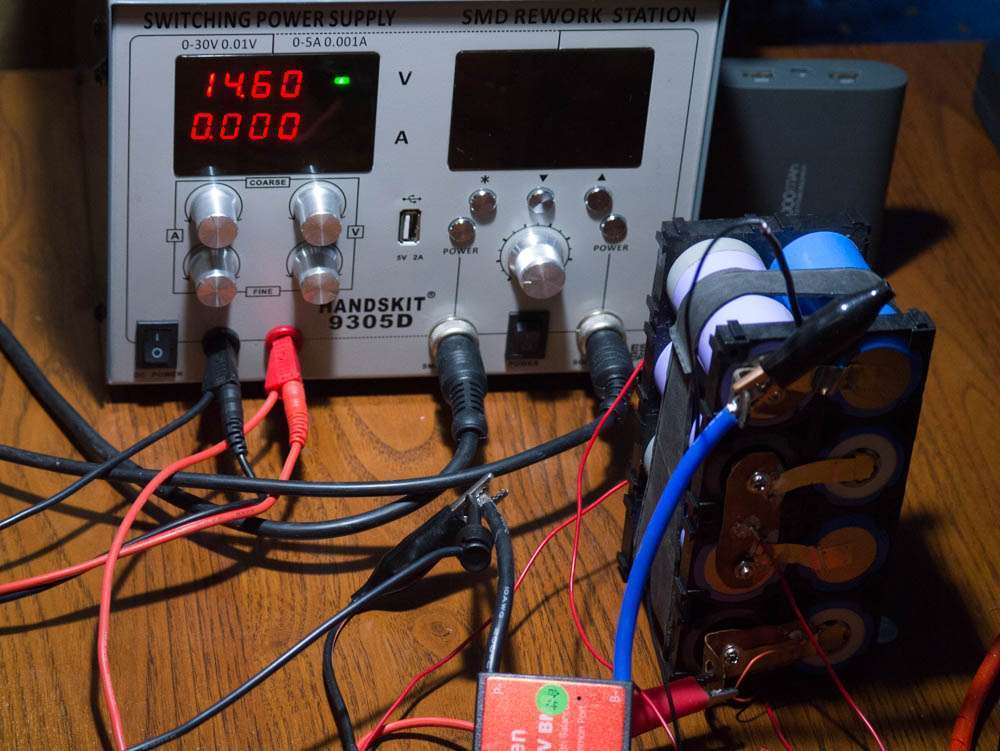
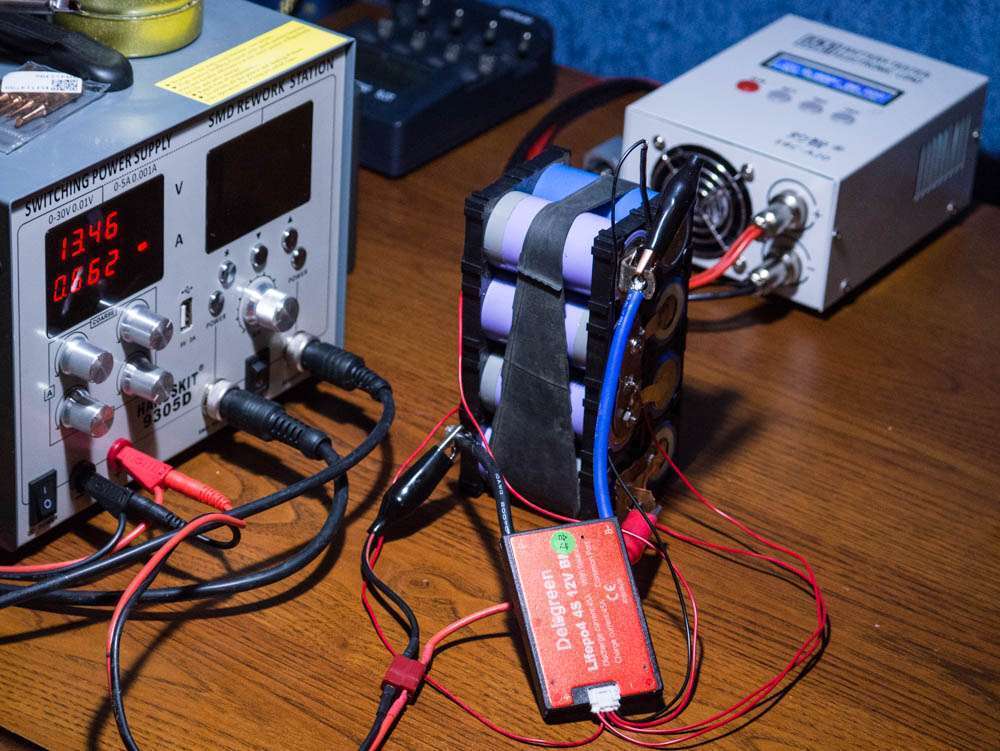
Now I'll connect the BMS to the battery and we'll move on to testing.
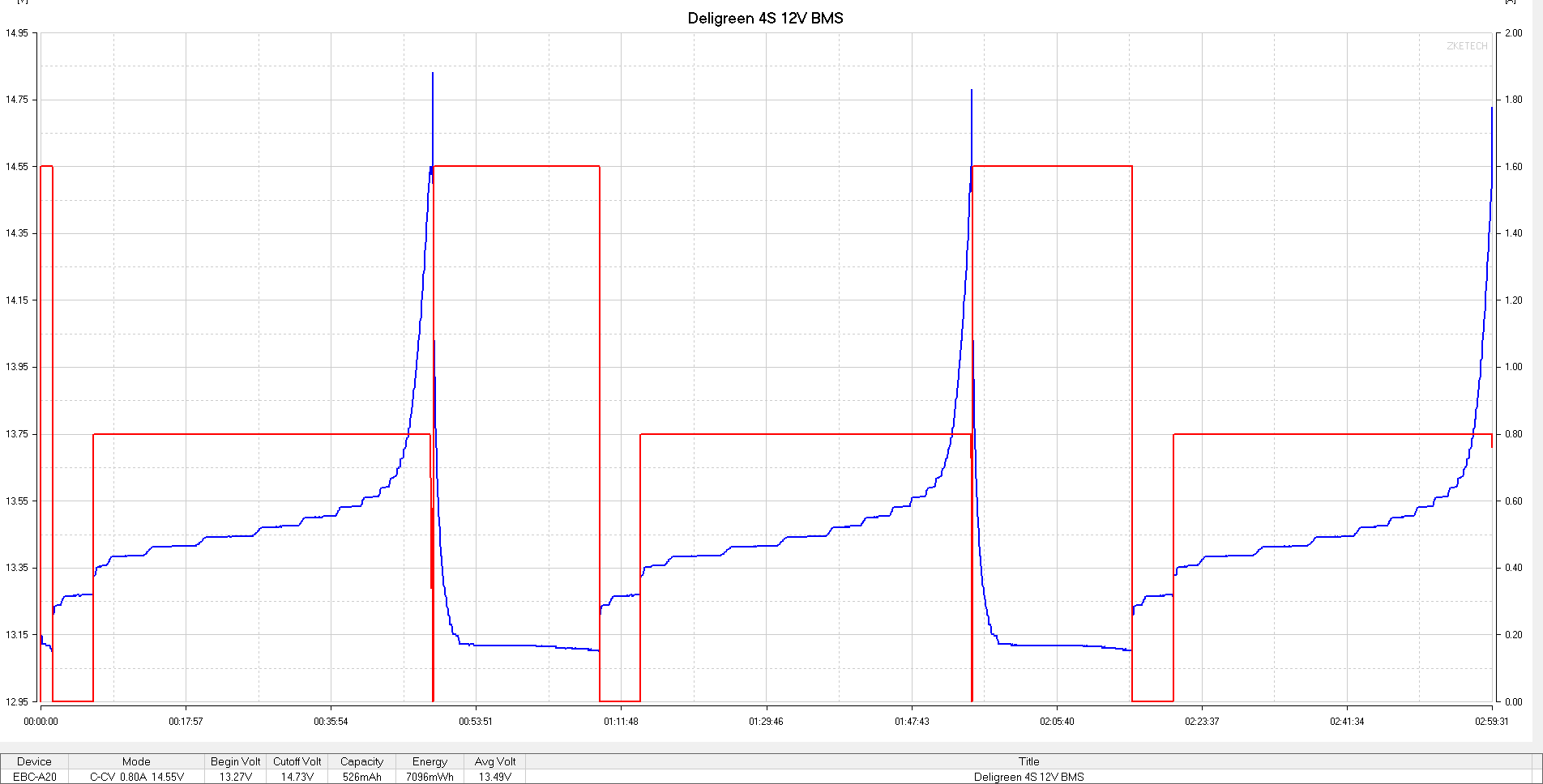
How will the testing go? I've already confirmed the BMS's ability to cut the load when the discharge current is exceeded, right in the course of using the battery on the motorcycle, so what's left to test is balancing and overcharge protection. I measured the voltage on the cells, then ran three partial charge-discharge cycles from 13.1 V to 14.6 V at a low current to see what would change. Why low currents and a partial cycle?
If you discharge a battery fully, then at a charge current of, say, 5A per cell, charging will take about an hour. According to the manufacturer, balancing is done at 35 mA after the cell voltage reaches 3.6 V, which means balancing itself only begins after the battery is more than 90% charged.
So you can discharge the batteries by only 10% and set a charging current 10 times lower (0.5A per cell); then the balancing itself takes 1 hour, at the same 35 mA current, so the balancing result should be more visible than in the first case.
The initial cell voltages after charging with a simple charger and 12 hours of "rest":
After connecting the BMS, three cycles and a 12-hour interval, the cell voltages came out like this:
There's still a spread, but it's smaller than before balancing. On the other hand, the total voltage (and final capacity) came out lower. That's because when charging a battery without a BMS, the charger using the CC/CV algorithm first raises the voltage to 14.6 V at the set current, and only stops charging after the current drops to 0.5A (0.125 A per cell). When charging a battery with a BMS, the BMS itself cuts the charge on reaching 14.6 volts, without waiting for the current to fall (you can clearly see on the graph the voltage spikes at the moment the current drops to zero, when the BMS disconnects the batteries). So if you follow the usual charging algorithm, the batteries will always end up undercharged by 1-2%. If those percent are critical for you and you can set charging parameters manually, just set the final voltage a little below 14.6 V.
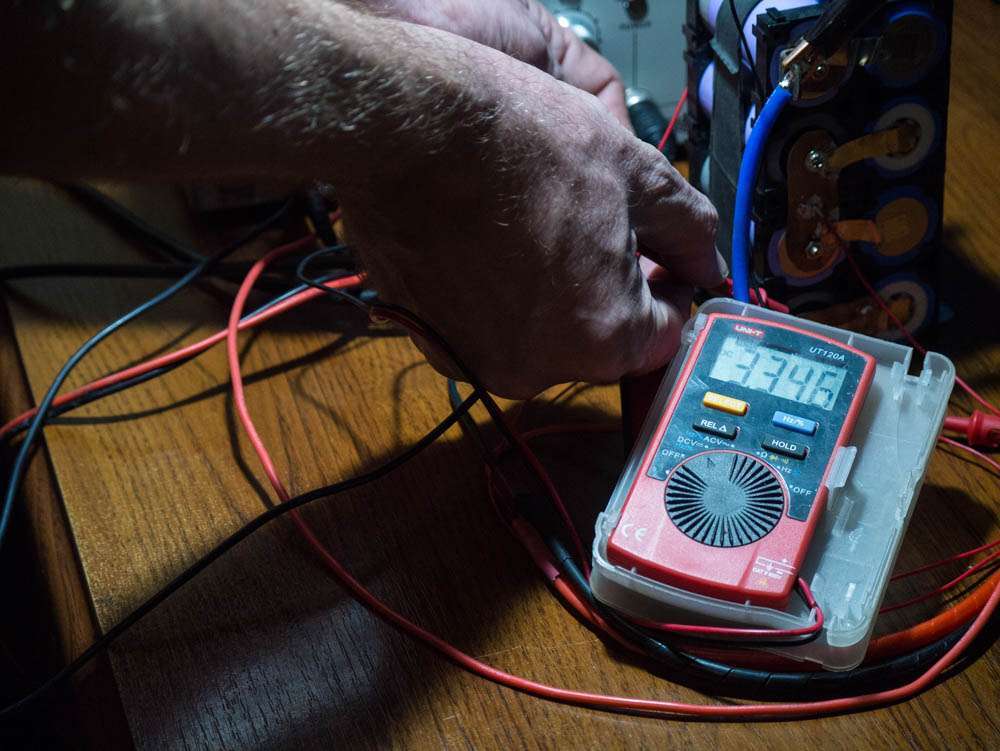
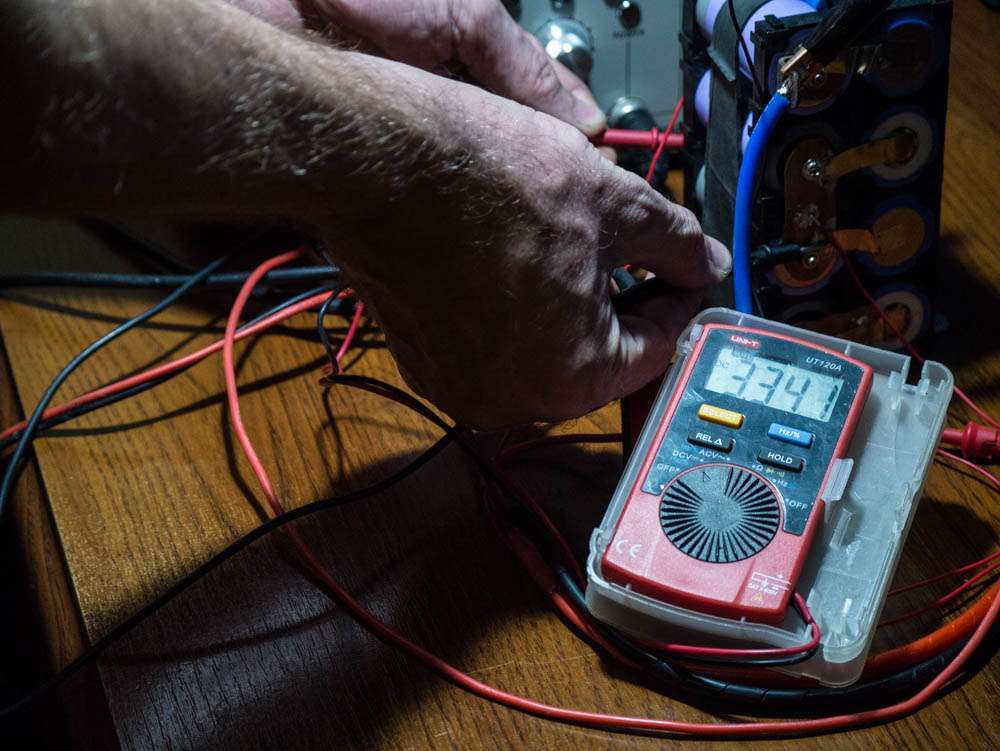
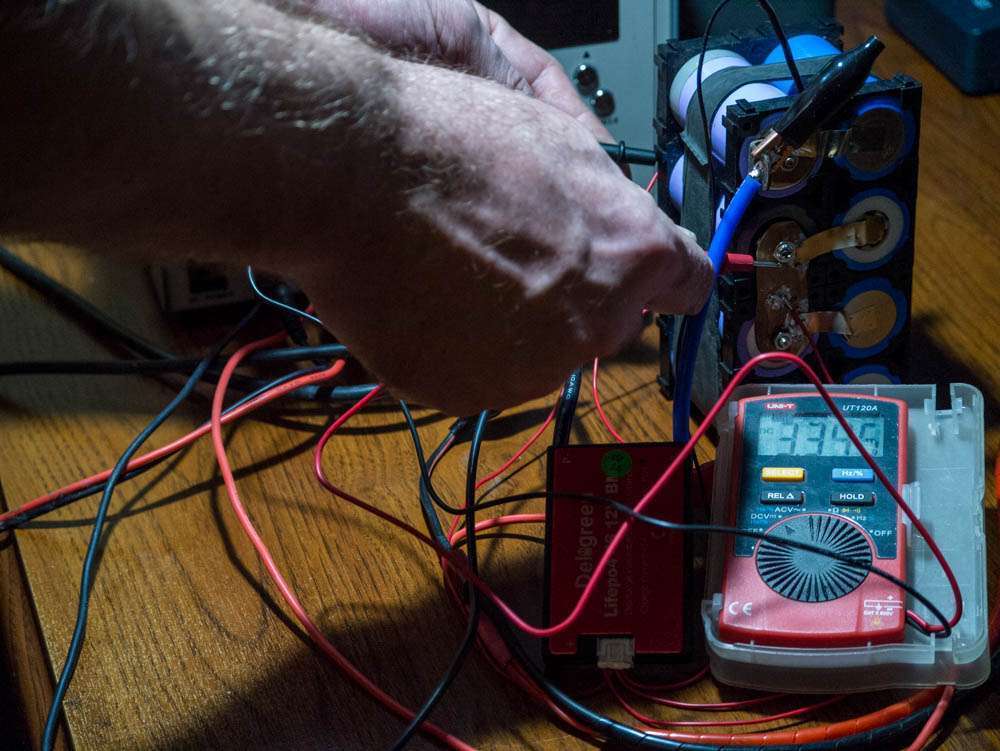
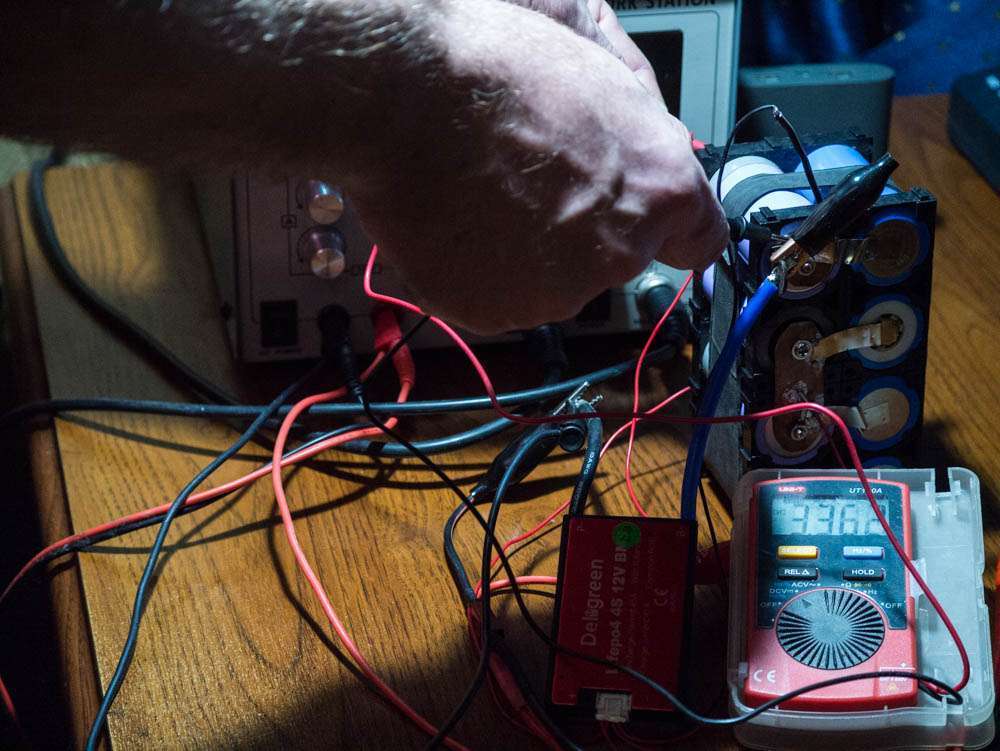
I'm incredibly surprised that during charging the voltage on the cells is exactly the same; I took several control measurements at different stages of charging. If you act fast enough, the voltage matches literally to the thousandths! I couldn't capture this in a photo, because charging is in progress and the voltage keeps rising. By the time I focused, took the picture, put the camera down and moved the probes, the voltage on the next battery had already gone up. But I'm obliged to write about it.
The BMS is excellent. For those who don't want to buy a "bare" BMS on Chinese chips, then build a sealed box and cooling and fuss with wires, it's the ideal option. I would have preferred a higher balancing current, but that's just my wish. The main thing is that the device matches its stated specifications; it's a pity it doesn't suit my purposes.
Прокомментируйте: