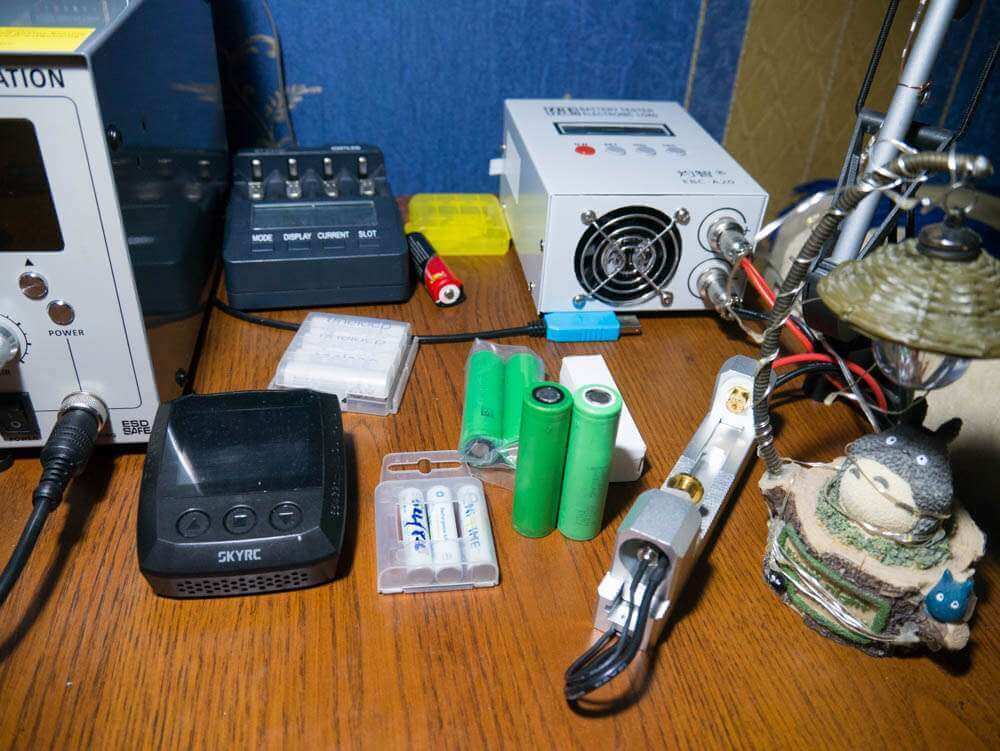
Equipment for testing batteries
Since 2012 I've been doing expert evaluations of power sources. Hundreds of batteries have gone through my tests, and the best ones stayed with me for personal use, because I deal with batteries not only at work but also on vacation. I travel a lot, I fish, and I always use mobile electronics, from flashlights and phones to fish finders and boat motors. So my opinion rests not just on the numbers from a single test; in most cases it's backed by personal experience with the device in question.
Enough self-promotion, back to batteries. With this half-chair, master Gambs begins a new batch of furniture From today I plan to share not only my experience but also battery test results, with clear graphs and discharge curves. I'll buy interesting batteries, both new and ones I've tried before, run fresh tests and record the results.
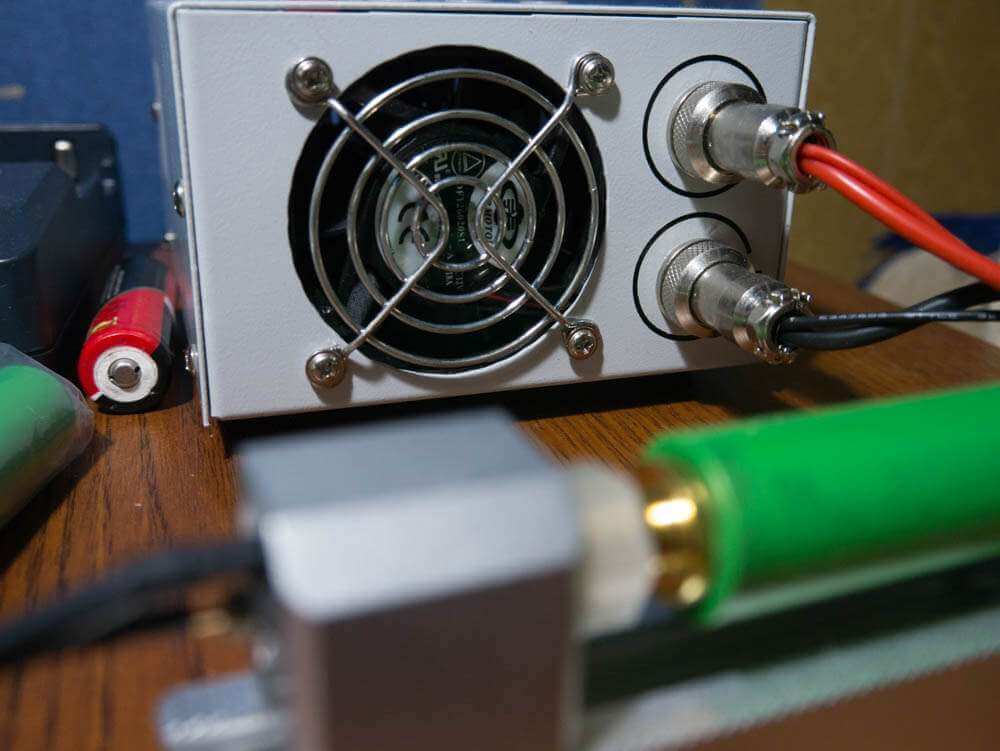
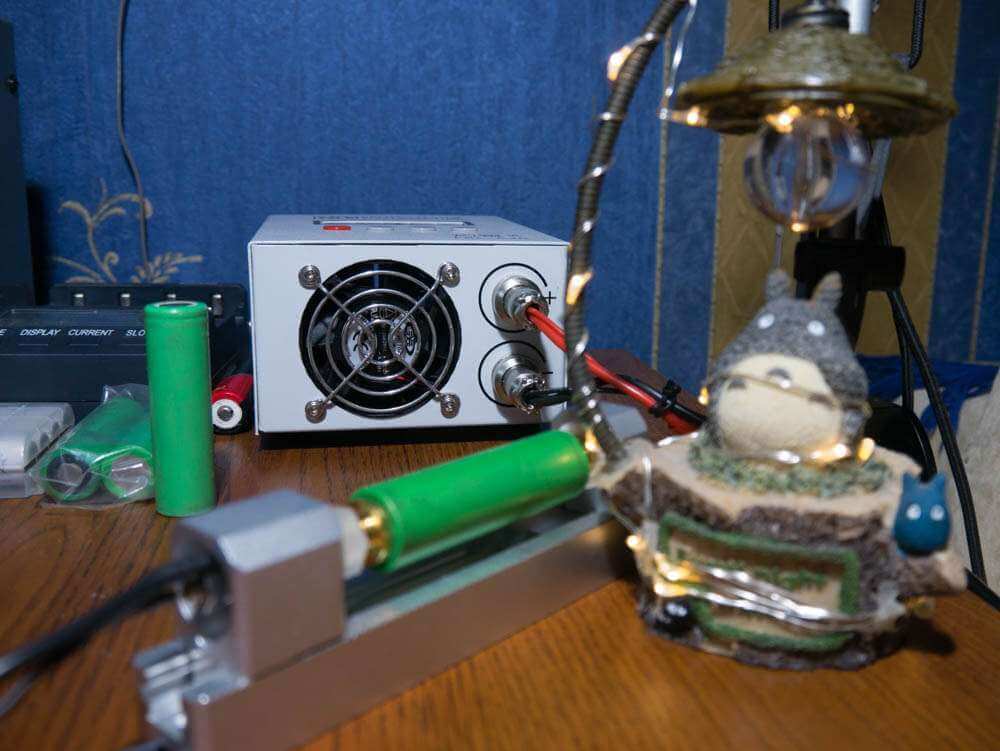
Battery tester (electronic load) ZkeTech EBC-A20
The Zketech EBC-A20, despite its simplicity, is a reasonably accurate instrument. It connects to a computer via USB and can plot graphs, record data to a file and draw discharge curves. It can discharge batteries at currents from 0.1A to 20A, with a measurement error of no more than 0.01A. Voltage measurement accuracy in the range from zero to 4.5V is up to 0.003V.
I understand that most readers aren't very interested in sorting through numbers. So I'll accompany the graphs and figures with a plain-language comment describing the typical tasks a given cell can handle.
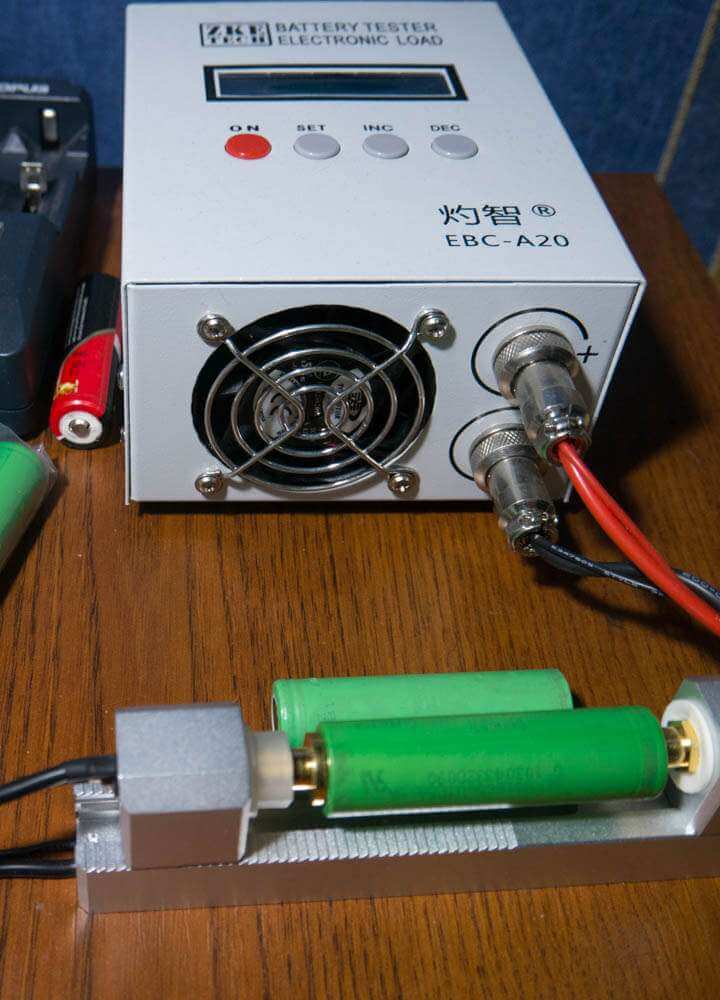
Battery holder 100MHz BF-2A 20A
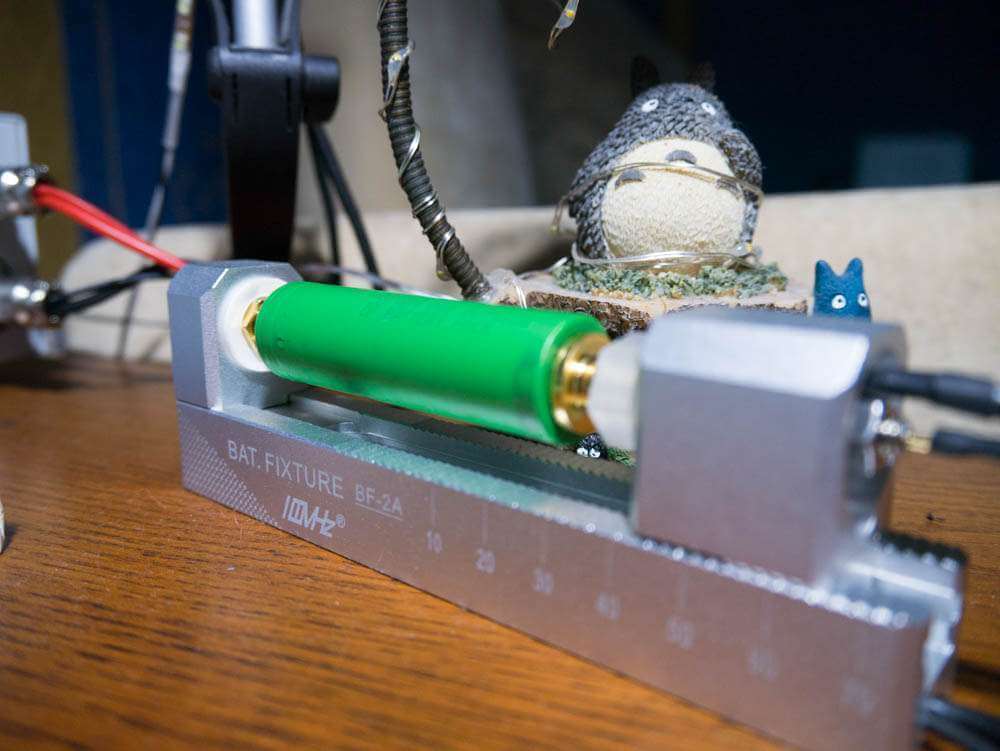
A measuring instrument is a wonderful thing, but it can't work on its own. For accurate results the battery has to be secured and connected. I went through quite a lot of holders and settled on a device under the "100MHz" brand. It's a self-locking holder with enough contact area to test batteries at up to 20 amps. It's made of aluminum, so it doesn't fear overheating like its plastic cousins. Also, it has two contacts per pole, one power contact for connecting the load and another for measuring voltage directly at the contacts, since voltage drops along the power wire under load. The power wire is 12 AWG (about 4 square millimeters in the units we're used to), rated for peak loads up to 80A.
It's exactly this kind of battery holder that allows testing high-drain batteries with sufficient accuracy. The price is about $50.
Battery testing method
For the end user two values matter most:
- How long a battery can run on one charge.
- What maximum load the battery is designed for.
The relationship between these two parameters is what I'll measure, namely, capacity under different discharge modes.
Before testing, I use an Opus BT-C3100 charger to run a discharge-charge cycle at about 0.2C (20% of the battery's capacity). I'll do the same kind of cycle between test stages. Before each stage the battery cools for at least 30 minutes.
Each battery will have its label removed to see what's inside.
Lithium batteries are tested at discharge currents of 0.5A, 1A, 5A, 10A, 15A and 20A. In addition, each battery will be tested at the current listed as its datasheet maximum, and I won't use steps that are more than one step above the maximum current. For example, a battery with a maximum discharge current of 8A will be tested at 0.5A, 1A, 5A, 8A and 10A, but I won't use 15A and 20A. During testing the battery sits in a box made of 1mm stainless steel, but I don't like it when batteries explode in my lab.
Nickel-metal hydride batteries will be tested at 0.1A, 0.5A, 1A, and high-drain (LSD) ones will additionally be tested at the current the manufacturer states as the maximum.
So testing a single battery will take several days. The section will fill up gradually, so I recommend subscribing to updates on social networks.
Thanks for your time. Good luck!