I wanted to use the 32650 LiFePo4 5000 mAh cells in a homemade motorcycle battery. And since they've come into my hands, I simply have to do a load test. After a long search I found LiFePo4 cells with screw terminals here.
So, here's what we have:
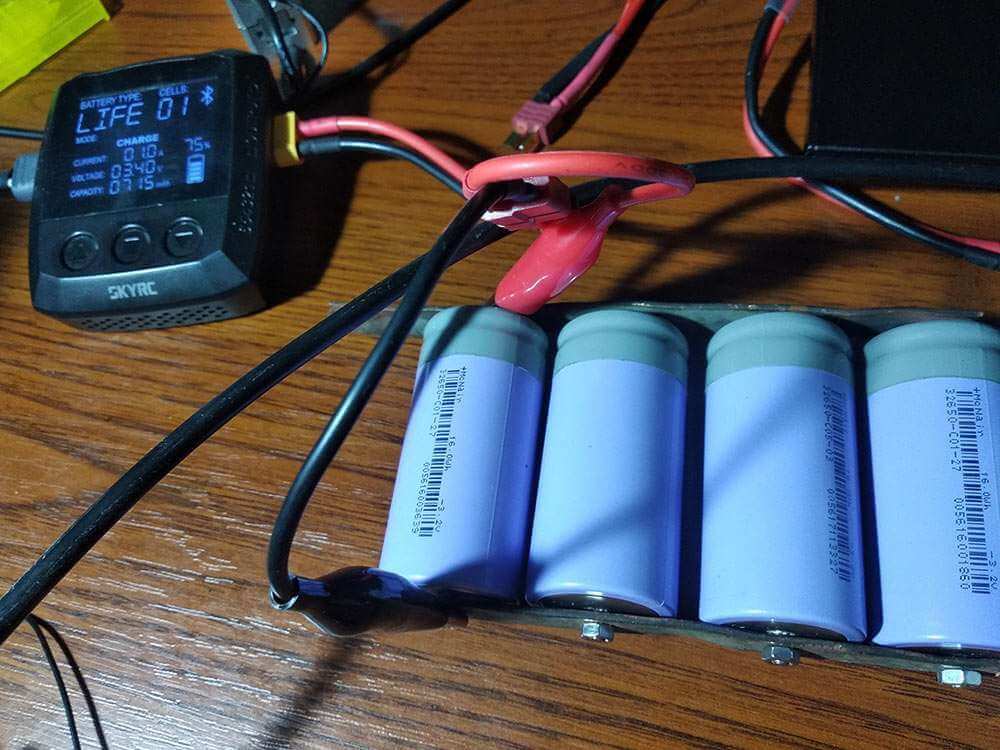
Since the cells are advertised as high-drain, we'll discharge them at high currents. To begin with, I'll charge them all by connecting them to the charger in parallel to balance the potentials; for this I built two busbars out of copper rod and mounted the cells in them.
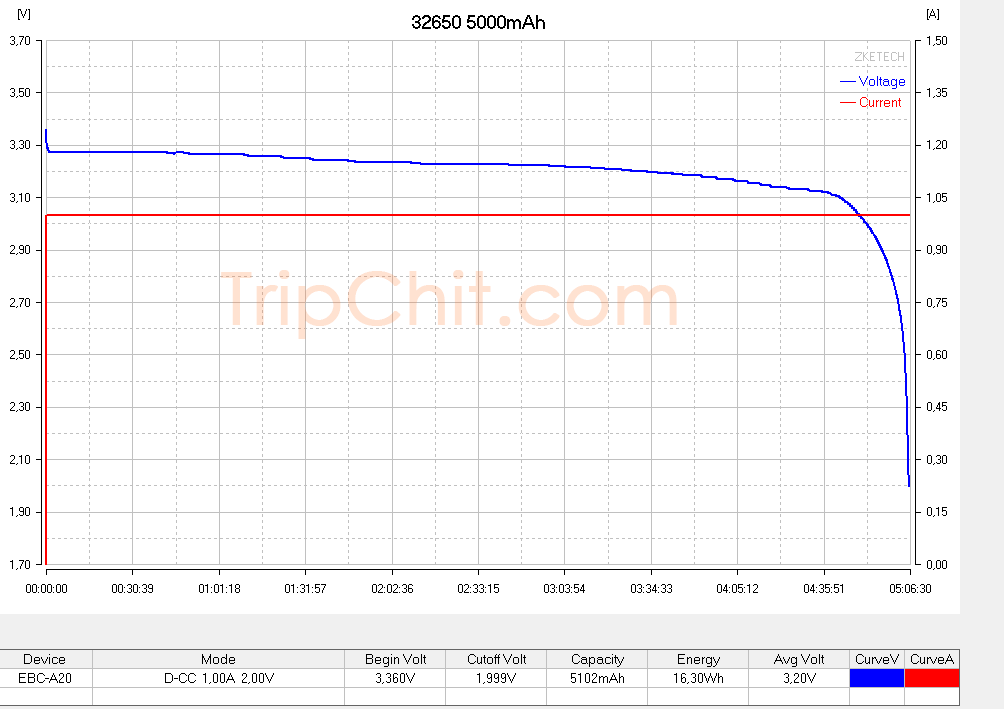
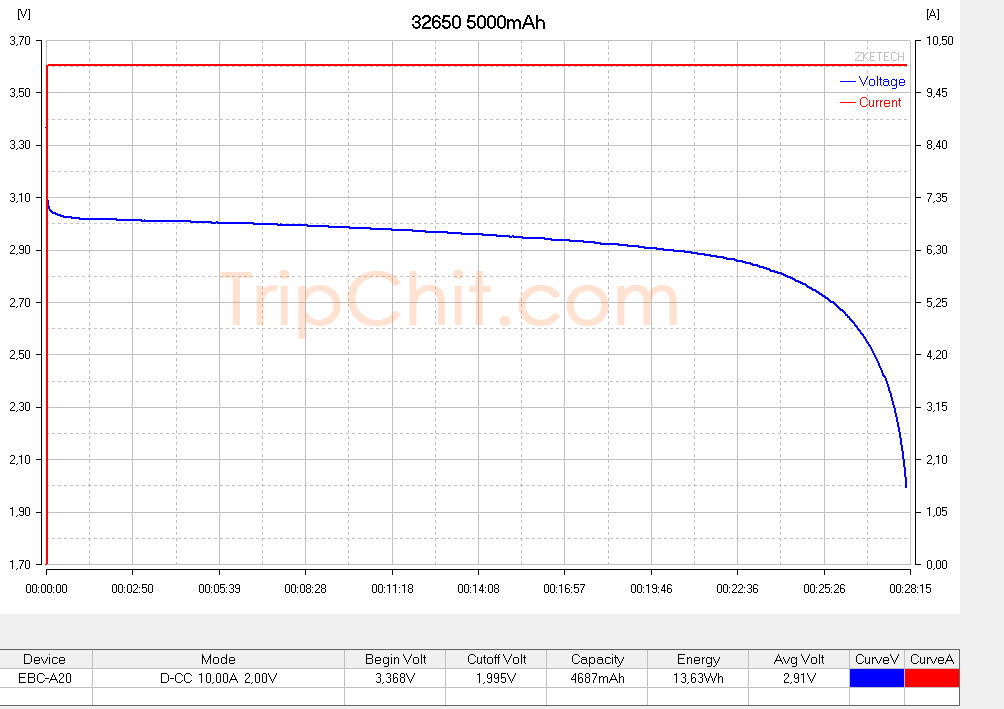
Then I'll discharge at 1, 5, 10 and 20 amps. My motorcycle's starter draws about 17 amps, so the results will be enough to judge the cells' suitability.
The measured internal resistance after charging: 39-43 mΩ.
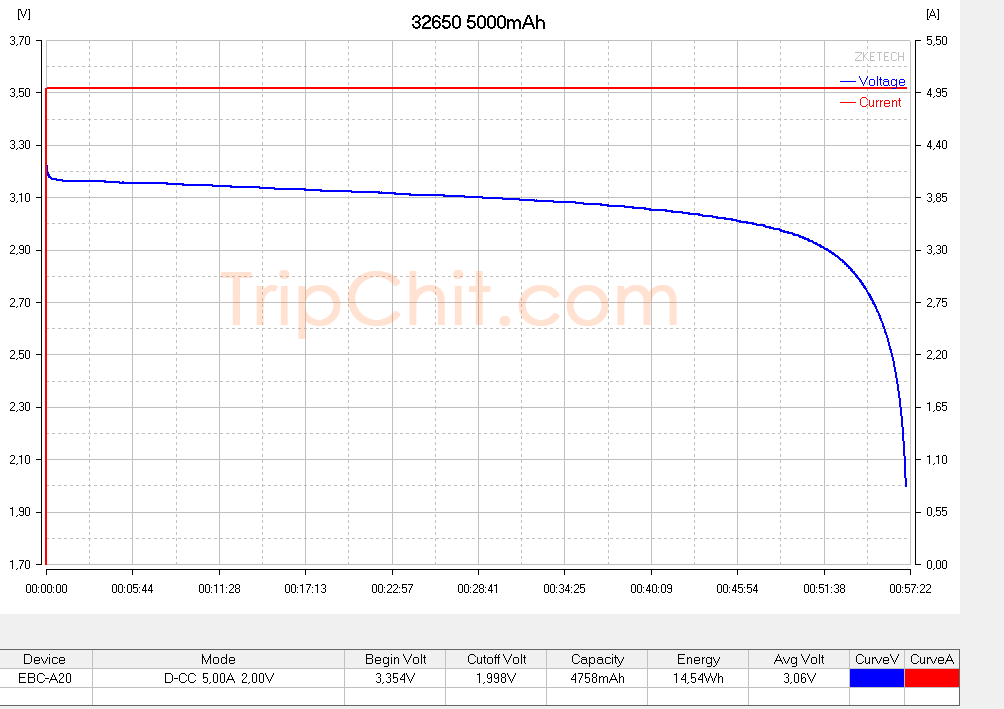
Discharged at 1C (5 amps), the cell delivered 4758 mAh with an average voltage of 3.06 V. Honestly, I'm dismayed by this result. Even the mundane Samsung ICR18650-26J, which aren't high-drain, calmly hold 1C without any drop in capacity or average voltage below nominal.
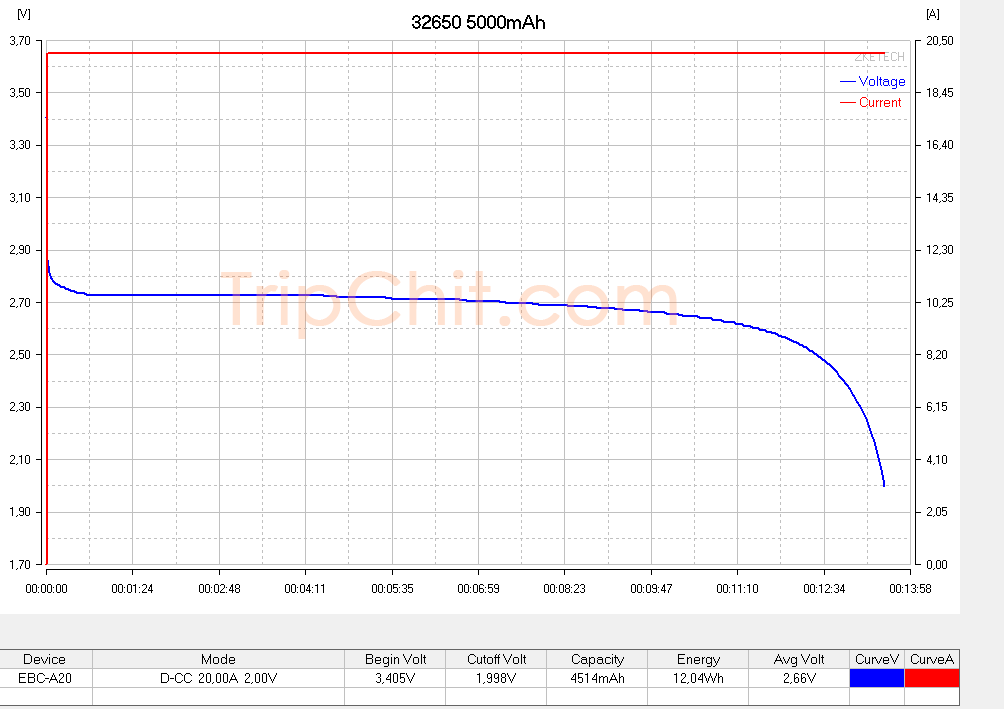
Discharged at 4C (20A) to 2V (the standard voltage at which LiFePo4 cells are considered fully discharged), the cell under test showed a capacity of 4514mAh, heating only to 45 degrees. This fine value is overshadowed only by the fact that when the load was switched on the cell voltage immediately dropped below 2.8 volts, and the average voltage was just 2.66V, meaning the average voltage of a battery of four cells at 20 amps would be only 10.64 V.
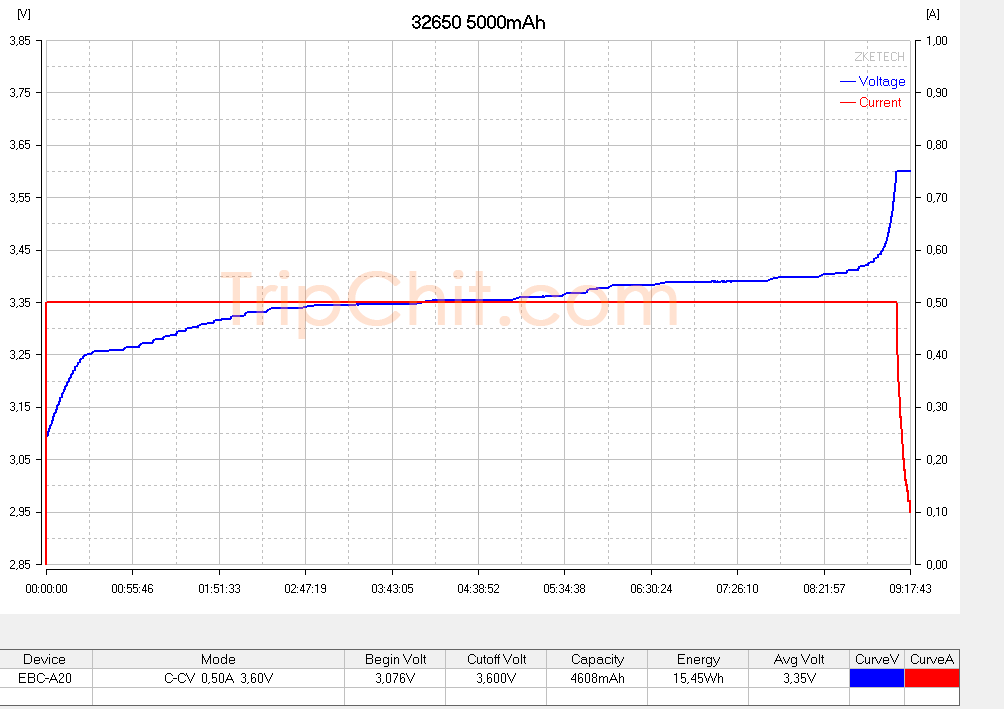
After the first test I charged the cell at the standard 0.1C current. The charging curve, frankly, puzzled me. The steps, voltage fluctuations and other artifacts visible on the graph point to an imbalance in the chemical composition. That could be forgiven in ordinary batteries if they were charged at a high current. Then I'd say that under heavy load the electrolyte and electrodes heat up and change their chemical and physical properties, but in our case a broken curve says only that the manufacturing standards are low.
I'll have to postpone assembling the motorcycle battery and run four or five discharge-charge cycles to start the chemical processes that stabilize the consistency and uniformity of the electrochemical distribution of materials in the active mass.
After assembling the battery it turned out that the heroes of today's test can't crank the starter; the protection trips. So, to help them out, I bought LiitoKala Lii-70A-N Lifepo4 32700 cells, whose test you can read at the link.
I hope both reviews will be useful to you when choosing lithium iron phosphate batteries.
Прокомментируйте: