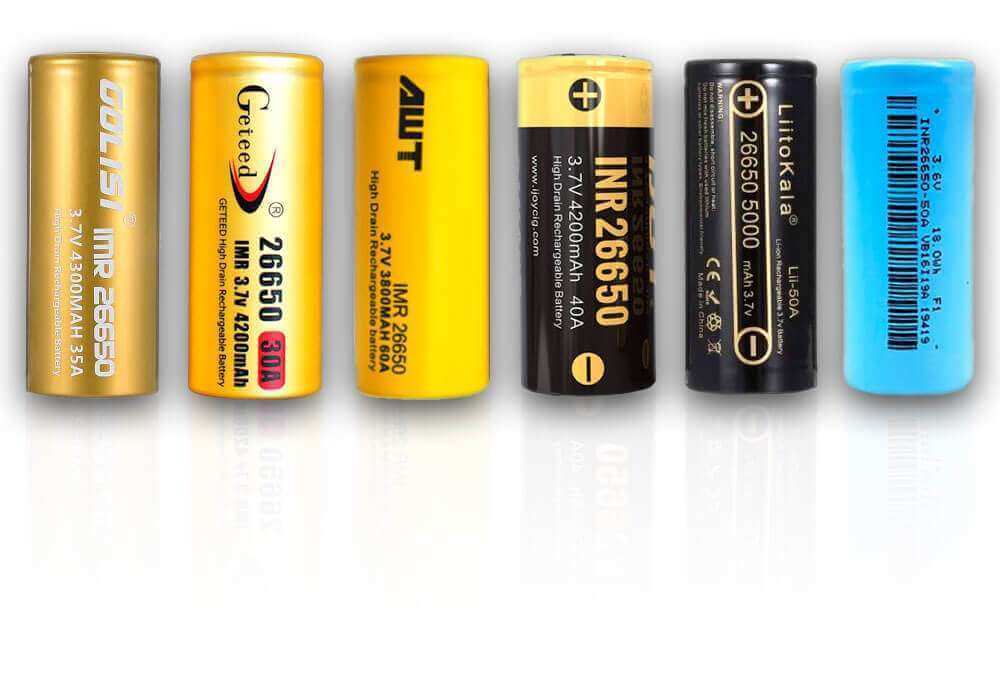
A review of eight high-drain 26650 batteries
When Geekvape released its first Aegis, I realized I had to have it. With my fishing, trips into the woods and other decidedly un-parquet hobbies, a device protected to the IP67 standard is a perfectly logical choice. And that meant dealing with 26650 batteries, of which, as usual, I ordered 9 different ones to test thoroughly and pick the best.
Jumping ahead, one battery never arrived, and the best turned out to be the Golisi S43, bought on Ali for 11 dollars.
I chose only high-drain batteries, since that matters for my purposes. The principle for choosing batteries is simple: never buy batteries with the word Fire in the name, and don't buy batteries with unrealistic stated parameters (a capacity higher than physically possible, for example). So I didn't consider BestFire, FandyFire, Soshine 10000 and the like at all.
At the time of writing I had no specialized equipment at home (I do now), so I used an Opus BT-c3100 charger, an adjustable electronic load with current stabilization on an IRF3205 N-channel transistor, a multimeter in relative measurement mode with zero at 2.75 V, and a stopwatch.
Capacity was measured several times: at 1A discharge (a gentle mode) and at the rated maximum current. If a battery held the stated current normally, I tried raising the discharge current to see at what current the battery is still usable, and lowering it a bit to find the highest discharge current at which the battery delivers its maximum capacity. Measurements were done first at low current, then at high, and between measurements I ran a charge-discharge-charge cycle at 1A.
Liitokala LII-51S, 5100mA yellow
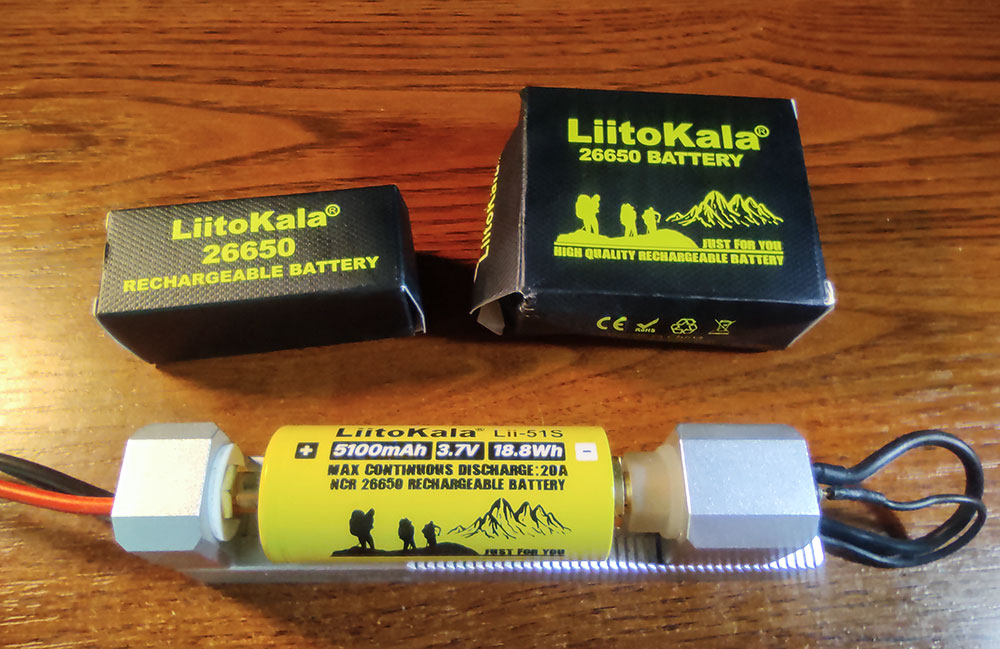
I decided to update the article with a new 26650 from Liitokala, the Lii-51S. The battery was ordered from the AliExpress LiitoKala Official Flagship Store, left China on August 2, 2020, but arrived only in October.
Battery specifications:
- Model: Liitokala Lii-51S;
- Rated capacity: 5100 mAh;
- Recommended charge current: 1-2A;
- Rated voltage: 3.7V
- Fully charged voltage: 4.2V
- Fully discharged voltage: 2.7V
- Maximum discharge current: 20A (4C);
- Weight: 94 grams.
Let's get to testing.
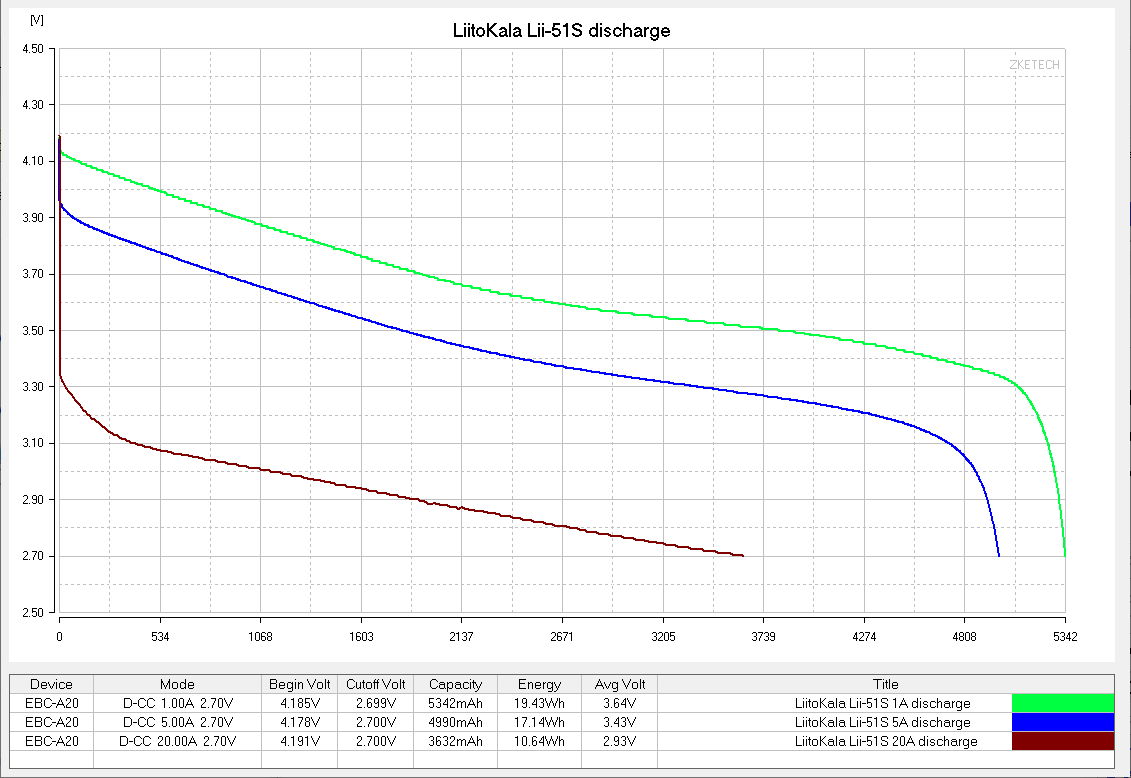
At a 1A discharge current the battery delivered 5342 mAh, substantially more than rated. But at 20 amps the capacity was only 3632 mAh, almost 30% below the stated one. It's worth noting that during this test the battery heated up to 70 degrees.
Well, overall not bad, but from a battery with an internal resistance of 17 mΩ I expected more. Earlier versions of Liitokala delivered 1000 mAh more at 20A.
LiitoKala 26650-50A 5000mAh, blue
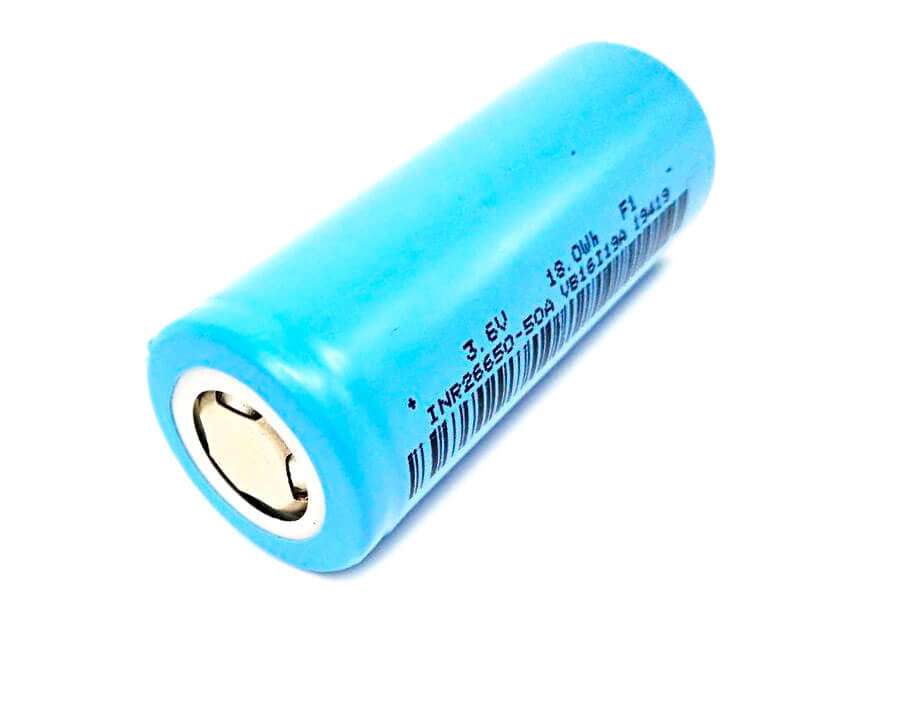
A battery from a well-known Chinese manufacturer. The full name is "LiitoKala INR26650-50A". Don't let the 50A in the name confuse you; it's just a marking. The maximum discharge current stated by the manufacturer is 20A.
This is the first version of this company's 26650 battery. Whether it's still being made or shops are selling leftovers of old batches, I don't know, but in specifications this battery is slightly better than the battery of the same name in black, not to mention the yellow one. The manufacturer's stated specifications:
- Capacity: 5000mAh
- Rated voltage: 3.6V
- Fully charged voltage: 4.2V
- Fully discharged voltage: 2.75V
- Maximum discharge current: 20A (4C).
The battery is quite good: at 20A it delivers 4750 mAh, and the voltage sag of a fully charged battery under that load is 4.20 -> 3.75 V. The maximum current I tested the battery at was 25A, with the initial voltage sagging from 4.2 to 3.6 volts and a discharge capacity of 4250 mAh. Under a 15A load the voltage sagged only to 3.85 V and the battery showed a capacity of 4950 mAh, which practically matches the stated one. Under a 1A load the capacity was 5100 mAh.
So we can say the LiitoKala INR26650-50A is a good example of Chinese battery making, its specifications almost match the stated ones, and it can safely be classed as high-drain.
Where to buy:
- Aliexpress - $5.25
LiitoKala 26650-50A 5000mAh, black
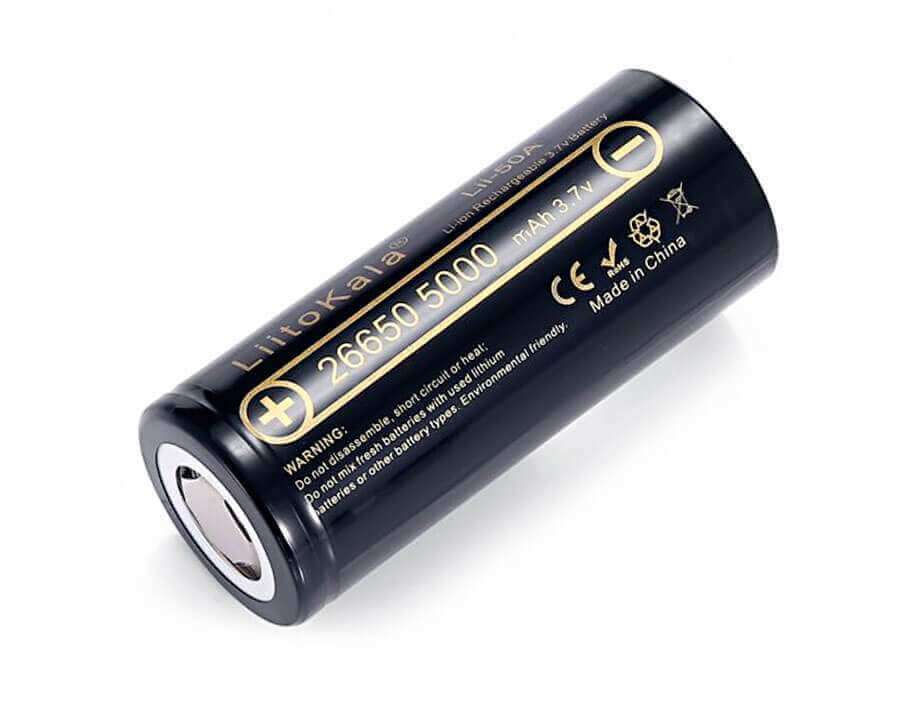
The second version of the LiitoKala INR26650-50A battery. As with the previous one, the stated maximum discharge current is 20A.
Specifications stated by the manufacturer:
- Capacity: 5000mAh
- Rated voltage: 3.7V
- Fully charged voltage: 4.2V
- Fully discharged voltage: 2.75V.
At first I thought the second version was just the previous battery with a new label, but it turned out not. The actually measured parameters are worse than the first version's.
Nevertheless, the difference from the previous version is only about 10%; if you find the second version much cheaper than the first, take it. Now to the numbers:
At 20A the "black one" delivers 4400 mAh, and the voltage sag of a fully charged battery under that load is 4.20 -> 3.70 V. The maximum current I tested the battery at, 25A, made the initial voltage sag from 4.2 to 3.5 volts, with a discharge capacity of only 3950 mAh. Under a 15A load the capacity was 4800 mAh with a sag to 3.8 V, while at 11A the initial voltage sagged only to 3.9 V and the battery showed a capacity of 5010 mAh. Under a 1A load the battery's capacity was 5100 mAh.
Judging by the measured sags, the real maximum current of the second-version LiitoKala INR26650-50A is closer to 15A. Conclusion: if you have a choice, take the first version; it's more "honest". On the other hand, even the not-at-all-Chinese Sony SE US26650VT with a 50A maximum current delivers less than 80% of its stated capacity at maximum current, so the second Liitokala version's result can be considered acceptable.
Where to buy:
- Aliexpress - $4.85
Geteed 3.7V 3500mAh 60A 26650
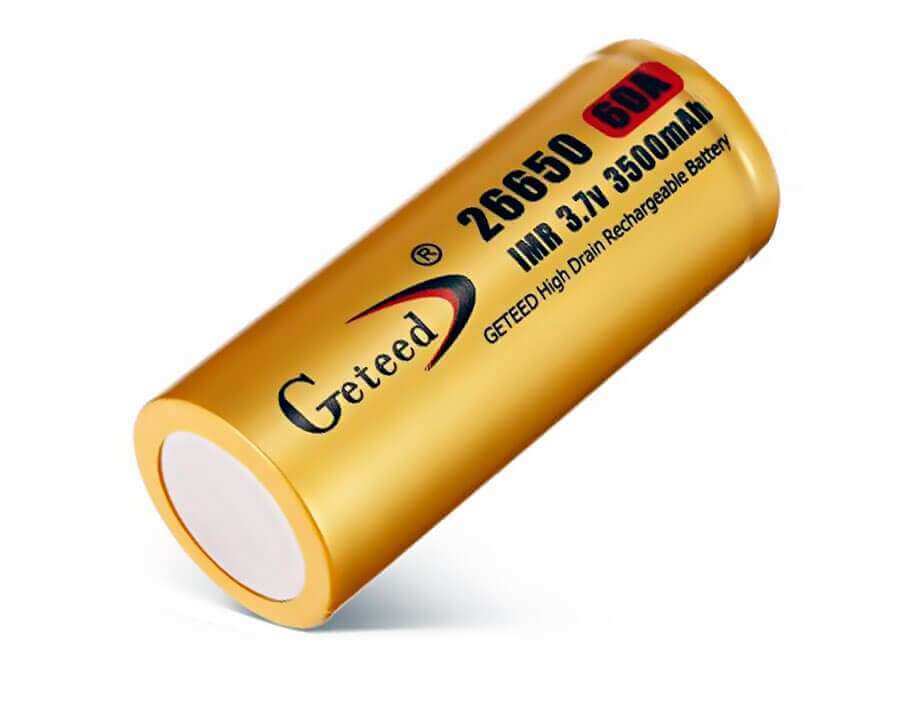
A potentially interesting battery whose specifications claim as much as 60A of continuous discharge current and up to 80A in short bursts. Considering its capacity is only 3500 mAh, these specifications could well turn out to be true.
Several batteries under different brands made on this same cell are now sold: Windyfire IMR26650, Efest IMR26650 and even Keeppower IMR26650, but all of them have 60 A as the maximum pulse current, with a maximum continuous of up to 35A. It should be noted that the cell's manufacturer, MNKE, isn't widely known, and such popularity of the cell can point both to good battery characteristics and to the cheapness of the cell itself.
Stated specifications:
- Capacity: 3500mAh
- Rated voltage: 3.7V
- Fully charged voltage: 4.2V
- Maximum discharge current: 60A.
IMR in the name means we have a battery using manganese oxide. In theory such batteries can deliver very high currents and tolerate discharge down to 2.5 volts. Let's check.
At a 35A test the battery delivered only 2200 mAh, sagging from the start to 3.40 V. At a 20A load I got 3150 mAh with a start sag to 3.7 V, while at 12A the initial voltage sagged only to 3.85 V and the battery showed a capacity of 3250 mAh. Under a 1A load the capacity was 3350 mAh. One more problem: after discharge to 3.5V the battery loses its remaining capacity within seconds.
Conclusion. The figure of 60A perhaps means that at such a load current the battery won't explode, i.e., such a battery can be called high-drain.
Where to buy? On AliExpress the MNKE IMR26650 is sold in its original form for 6 dollars. Repackagers sell their batteries for even more, but since the real usable capacity doesn't exceed 3350 mAh, I see not the slightest point in buying it.
Geteed IMR26650 22A 4200mAh
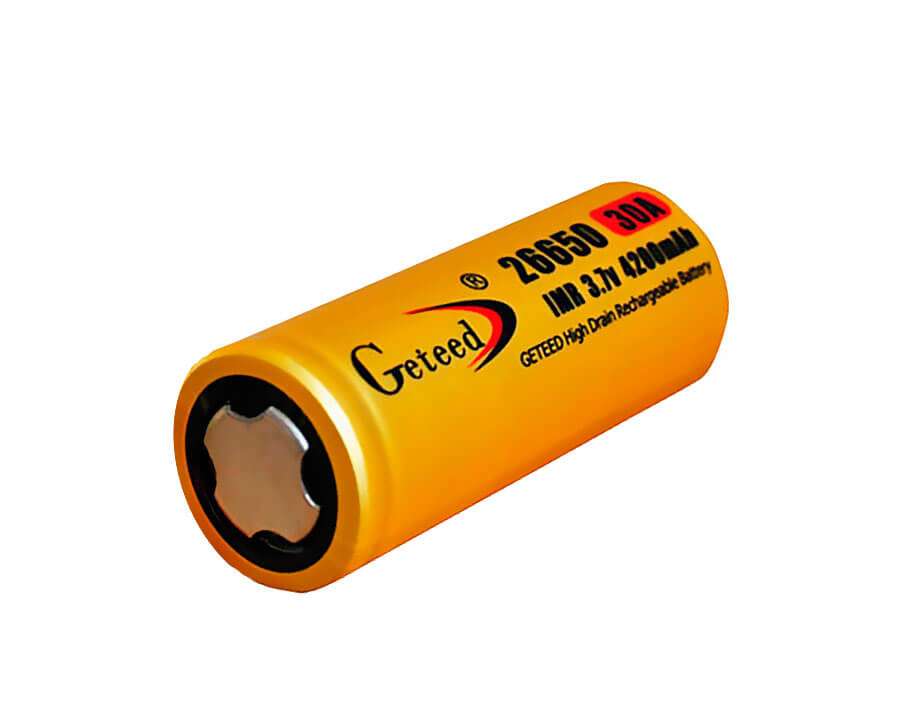
And again we have an IMR battery.
Stated specifications:
- Capacity: 4200mAh
- Rated voltage: 3.7V
- Fully charged voltage: 4.2V
- Maximum discharge current: 22A
- Maximum pulse discharge current: 30A.
The stated numbers look understated, i.e., they're realistic numbers for an IMR, but the Chinese simply can't not inflate them. I can accept that a Samsung ICR18650-25J cell with a stated maximum current of 5.2A calmly handles a 10 amp discharge, but that a little-known Chinese company printed real specifications on a battery, I can never believe. Still, let's measure.
At a 1A load the capacity was 4300 mAh. Not bad. We set 22A. The voltage immediately drops to almost 3.5 volts, but the battery holds on. The final capacity came to 3700 mAh, and the battery noticeably heated up. On the next cycle I didn't raise the current and set 12 A. The result is excellent, 4300 mAh and a sag only to 3.85V.
A rather strange battery that breaks out of the Chinese logic I understand. Either there's an ICR under the label instead of an IMR, or it's the same cell as in the Eizfan IMR26650, which caught fire for foreigners during a 30A test, so Geteed played it safe and didn't inflate the parameters. It delivers its 4200 mAh, and 15 amps is a working load. Everything seems fine, but against the sky-high specifications of their previous battery there's a feeling of something left unsaid.
Where to buy:
Fasttech, $9.20. I bought on Ali, but they don't sell them there anymore, and there's no need anyway.
AWT IMR26650 3800mAh 60A
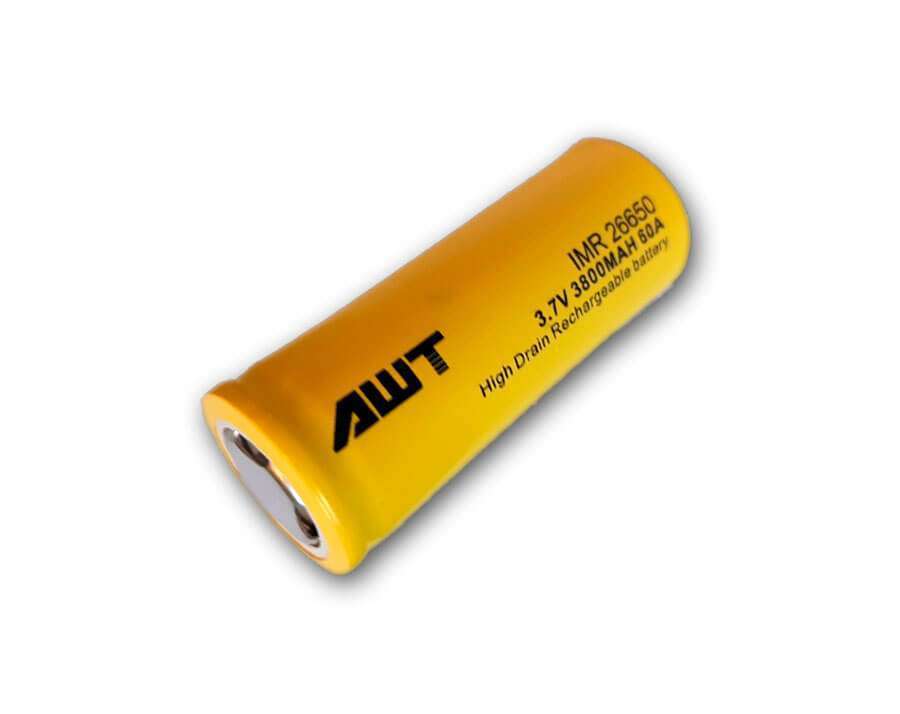
The much-praised (or simply widely advertised) AWT with a maximum discharge current of as much as 60A, which I was counting on a lot.
Stated specifications:
- Capacity: 3800mAh
- Rated voltage: 3.7V
- Fully charged voltage: 4.2V
- Fully discharged voltage: 2.75V
- Maximum discharge current: 60A
At a 1A load the capacity was 4000 mAh. We set 20A. Oops. 3.3 volts and the voltage drops before our eyes; I see no point testing further, a sag from 4.20 to 3.30 means 20 amps is not a working current. I decided to check the voltage drop under different loads. At first it came out almost linear:
3A - 4V,
5A - 3.9V,
7.5A - 3.8V,
9A - 3.7V,
and then the amazing part began. The battery couldn't hold even ten amps: a drop to 3.6V, 12A at 3.4V, and that's with the 60A claimed by the manufacturer. "Excuse me, but this is the much-praised AWT!" I wanted to exclaim, but I simply moved on to the next battery.
I paid $14 for a pair. They're no longer made.
Ijoy INR26650 40A 4200mAh
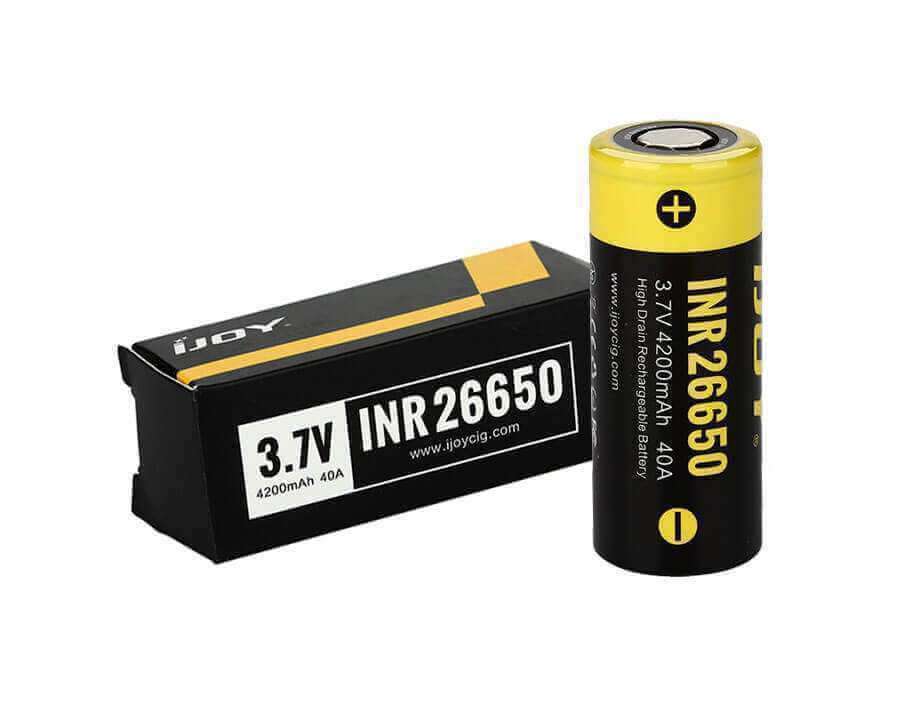
An INR battery with lithium-manganese-nickel chemistry. Thanks to manganese's low resistance and nickel's high energy, such batteries have the highest energy efficiency among common lithium batteries.
They can deliver the same currents as an IMR but have more capacity. They should also tolerate discharge down to 2.5 volts. The battery arrived with a scratch code on the side and was immediately checked for authenticity. Genuine, of course.
Stated specifications:
- Capacity: 4200mAh
- Rated voltage: 3.7V
- Fully charged voltage: 4.2V
- Fully discharged voltage: 2.75V
- Maximum discharge current: 40A
Since Ijoy is a well-known global maker of vaping goods, I wasn't surprised that the battery's parameters matched reality. Discharge under a 1A load: 4200 mAh. We start a 35A discharge. The voltage drops to 3.6 volts, but the battery copes fine. After 6 minutes and 1 second the voltage drops to 2.75 volts and we stop. Here, even without a calculator, it's clear that the capacity delivered by the battery is more than 3500 mAh at a load of 35 amps! Now that's a real high-drain battery.
Charge, discharge and charge again. I want to check at what maximum current it delivers its rated capacity. I set 16 amps on a hunch. The voltage drops to 3.9 volts; frankly, this battery holds the load excellently. After 15 minutes 31 seconds the multimeter in relative mode shows 0.00: the voltage has dropped to 2.75.
4133 mAh, an excellent result. This battery can be recommended with confidence.
Where to buy?
On AliExpress, $11 apiece.
Golisi S43 35A 4300mAh
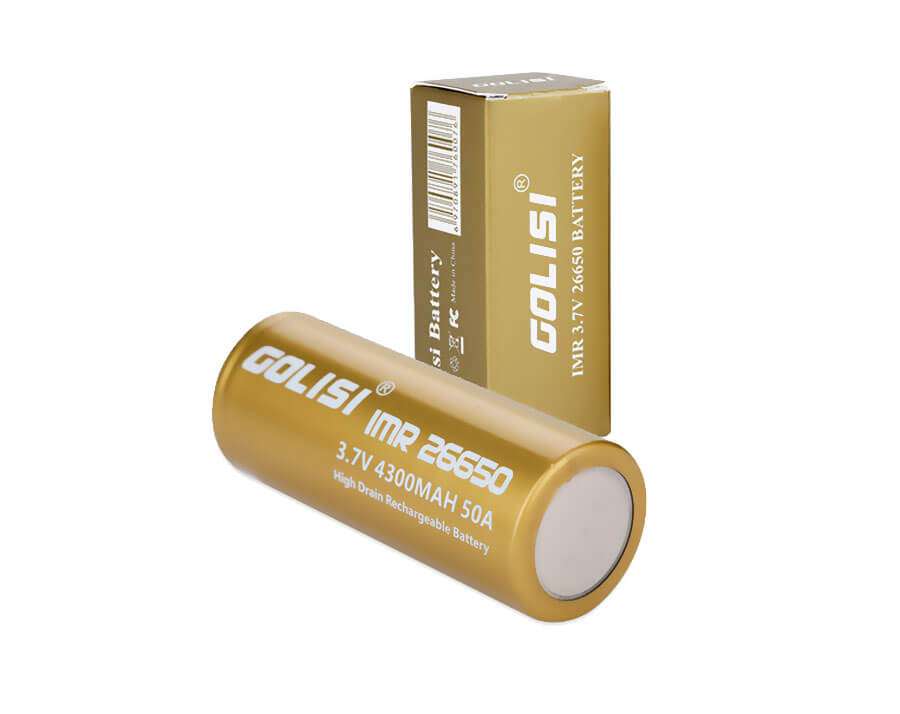
An IMR again, but in specifications it's not much different from the previous INR battery. It should be noted that Ijoy and Golisi are among the top three 26650 batteries in the world (according to Mooch). Well, let's see who'll be the champion in my testing.
Stated specifications:
- Capacity: 4300mAh
- Rated voltage: 3.7V
- Fully charged voltage: 4.2V
- Fully discharged voltage: 2.75V
- Maximum discharge current: 35A
Discharge under a 1A load: 4300 mAh. So far everything's honest. We start a 35A discharge. The voltage drops only to 3.72 volts, wow! We wait 6 minutes and look at the multimeter screen: the relative voltage is still 0.25 volts. I keep watching, not taking my eyes off. The multimeter showed zero after 6 minutes 51 seconds. 4000 mAh.
Well, let's congratulate the champion. This battery is definitely worth the money spent.
Where to buy?
- It was on AliExpress - $11.60
A short conclusion
Although the 26650 format looks promising, there are no outstanding batteries in this size yet. The Golisi S43 is certainly excellent and shows an impressive 4000 mAh at a 35A load current, but let's compare it with the 18650 format. A 26650 battery weighs about 95 grams, which is heavier than two batteries such as the Sony US18650VTC5 (44.5 g), which under the same load will easily give us 2300 mAh each. And considering that top-tier manufacturers aren't in a hurry to bring 26650 batteries to market (except Sony, whose Sony SE US26650VT 2600mAh loses in 30A load tests to their own US18650VTC5 at three times the price), the potential of this format won't be unlocked any time soon.
There are an order of magnitude fewer devices for the 26650 format than for the equally new 20700/21700 format, and two orders of magnitude fewer than for 18650. GB for the query "26650" gives only 48 items, for "21700" 31, and for "18650" 401 devices, including 200 flashlights and over 100 other gadgets. And the latter I can take out of a vape and put in a homemade power bank, then from there into a flashlight, then charge it from a cigarette lighter with a penny Lii-100 car charger and put it back in the vape, while the 26650 format, besides e-cigarettes and a few flashlight models, is understood only by chargers.
On the other hand, 21700 is now in demand with makers of electric cars, e-bikes and other electric scooters, and possibly very soon it will become the de facto standard. Especially since cells of this format, for example the Samsung INR21700-30T (weight 67 grams, price 9 dollars), easily pull 50 amps. That's 185 watts from one battery, versus 129.5 for today's champion of mine.
And finally. Which batteries should you choose for the Geekvape Aegis? If you don't plan to vape at more than 100 W (and the Aegis can't do more anyway), 25 amps is quite enough for you. And 4200 mAh for $5.25 from LiitoKala is no worse than the same 4200 mAh for the champion's $11.