A metal detector came my way the other day by chance. I went out for the first time, dug for about three hours, and that was it, the battery died. Then I took a pair of 6F22 rechargeables, but they barely lasted one outing either. I decided to replace this nuisance with proper high-capacity batteries. Let's work out what can replace Krona batteries (6F22, 6LR61, ER9V and so on), using the following starting data:
Here's what we get. Three fully charged li-ion cells give 12.6 V, which seems like too much to me. Two fully charged lithium cells give 8.4 V. That's less than a fresh Krona battery, but it's exactly the middle of its discharge curve, and quite enough to power a metal detector.
Of course, 7.2 V (the lower discharge limit of a Krona battery) is, for lithium cells, the nominal voltage of two 18650s (two at 3.6 V), so the metal detector will show a full discharge when the cells still have plenty of energy. But even then, instead of the 200 mAh of a typical NiMH battery we'll get a full 1300 mAh, even if we take the cheapest "people's" Samsung ICR18650 cells, and up to 2000 mAh for more expensive ones. That's at least six and a half times more than 6F22 rechargeables, and more than twice as much as an expensive Duracell Alkaline or Varta Longlife Extra battery, while the price of one 18650 cell is roughly equal to the price of such a battery.
The cells will work in a very gentle regime; discharging "to zero" is ruled out in this configuration, which guarantees both a very long life for the 18650 cells themselves (500 cycles, no fewer) and a fairly long and productive runtime for the metal detector.
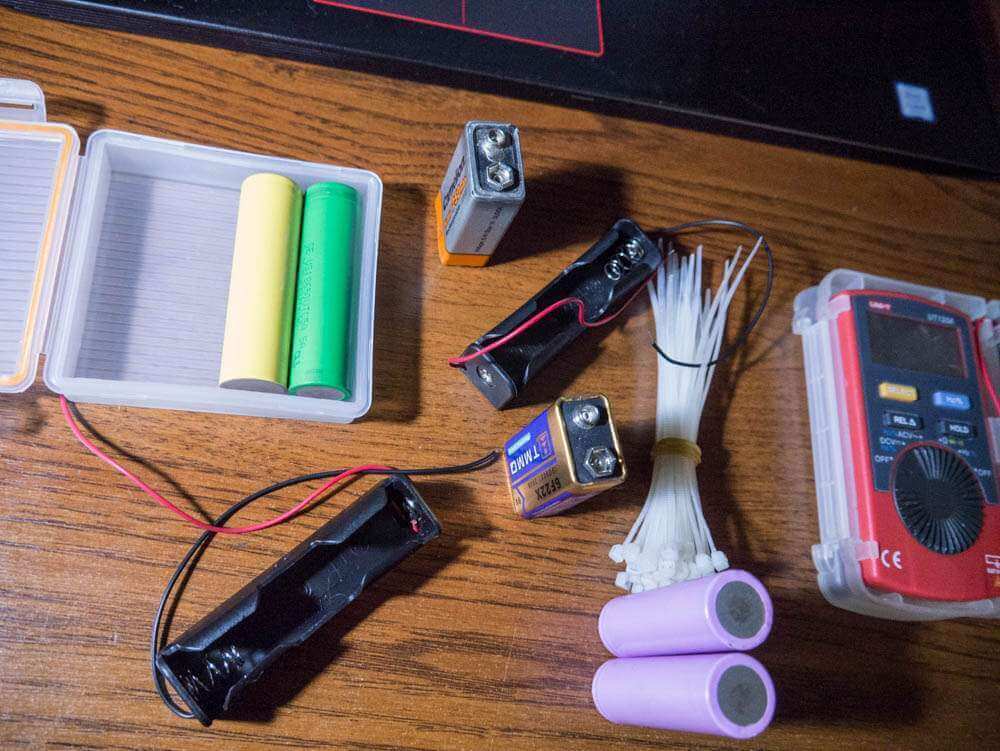
Luckily I had both 18650 holders, the cells themselves and a dead Krona battery on my shelves. I also needed heat-shrink tubing, plastic zip ties, wire cutters, a soldering iron and an hour of time.
Let's get started.
If I hadn't had the original parts, I would have had to buy them. I'll sketch a list of what you can't do without, with cheaper and pricier options, and you choose for yourself:
All of this, except the cells themselves, can be bought at the nearest electronics market. True, the cells at the market will be about twice as expensive.
Since the modification shouldn't affect the state of the detector's body, I decided not to solder to the device's terminals but to use a dummy Krona battery to connect the lithium cells to the metal detector. First you need to remove the guts from an old Krona. To do that, use a knife to bend up the crimped bottom edge, then straighten it with flat-nose or round-nose pliers, and finally, by pressing on the contact plate, push the contents out of the battery's case. Note that the battery should be fresh. Leaked batteries won't do, because they're hard to wash clean of electrolyte.
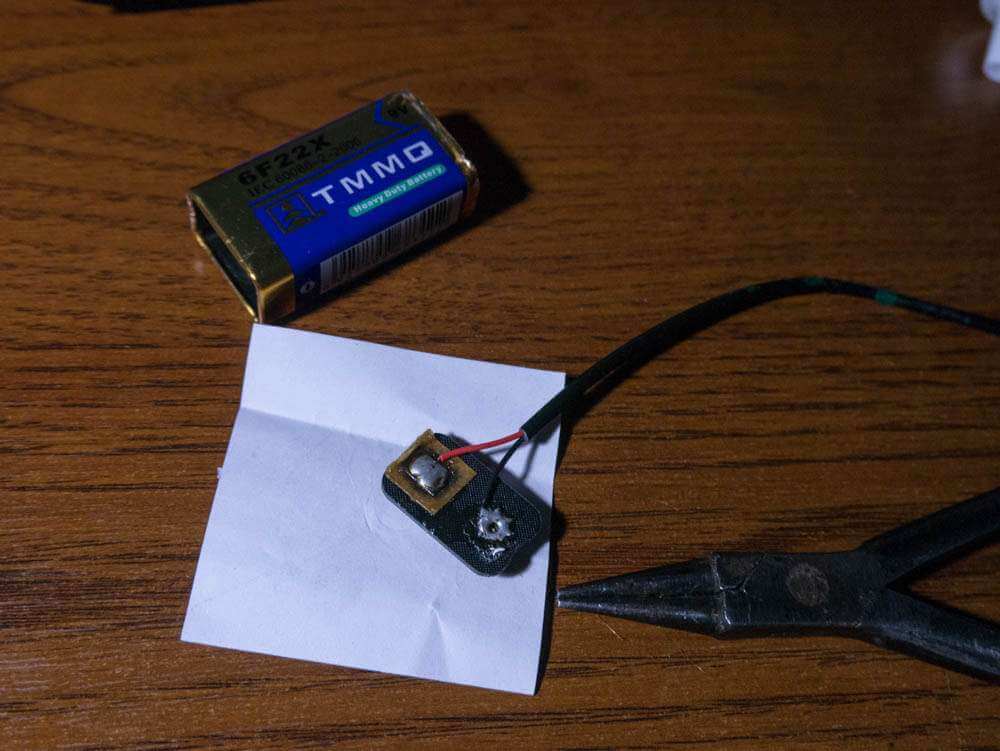
Step two: we dispose of the cells, as we don't need them. After removing them, solder to the contact plate. Red is plus, black is minus; our minus is the big "female" contact and the plus is the small "male" one. After that you need to clean the solder joint of flux so that our battery lasts a long time (the photo is right after soldering, I hadn't cleaned it yet).
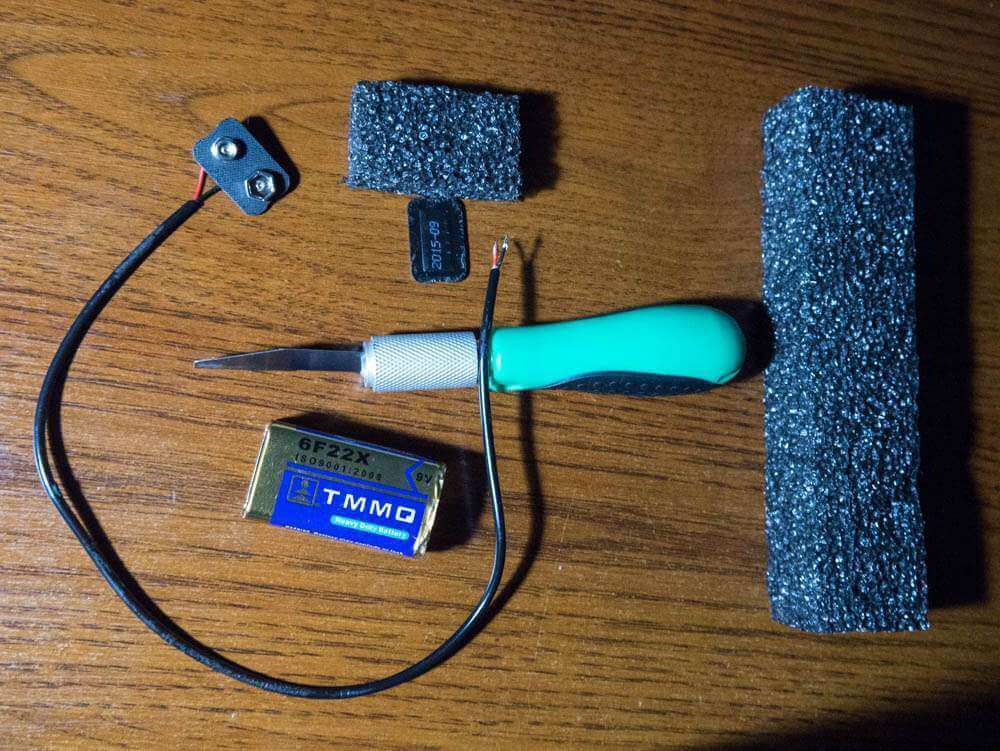
Next step: we prepare the new insides of our wonder battery. I took dense packing foam and cut a filler from it a little bigger than the battery's case, so the contact pad wouldn't be pressed in by the contacts when installed in the metal detector.
In the back plate I drilled a hole for the wire, and not exactly in the center but closer to one of the edges (which will be at the top once the battery is installed). I made a cut in the foam to lay the wire in, and a knot in the wire itself so as not to tear off the contacts if I happen to snag it on something. Then I packed in the contact pad (observing the polarity marked on the case!!!), pressed it with the foam, then the bottom plate, and then crimped all this back as neatly as I could. How it turned out is visible in the photo.
That's it, congratulations, the hardest part is behind us. Now we solder the wires from the battery box to our decoy battery (polarity!) and fix the box to the shaft with zip ties. That's it, you can install it.
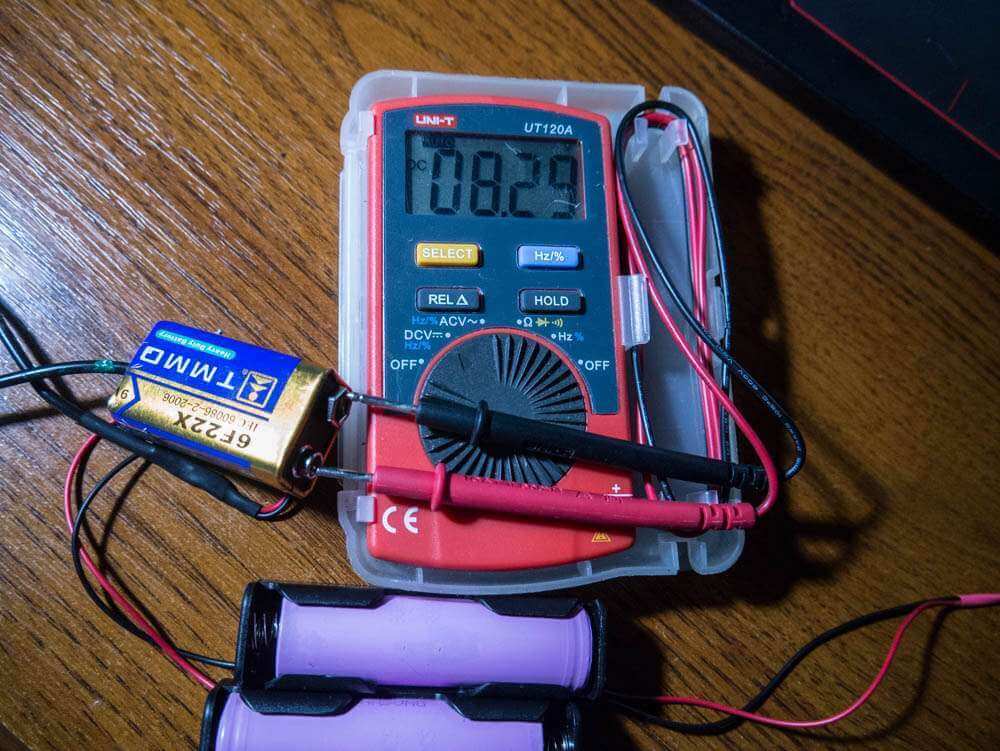
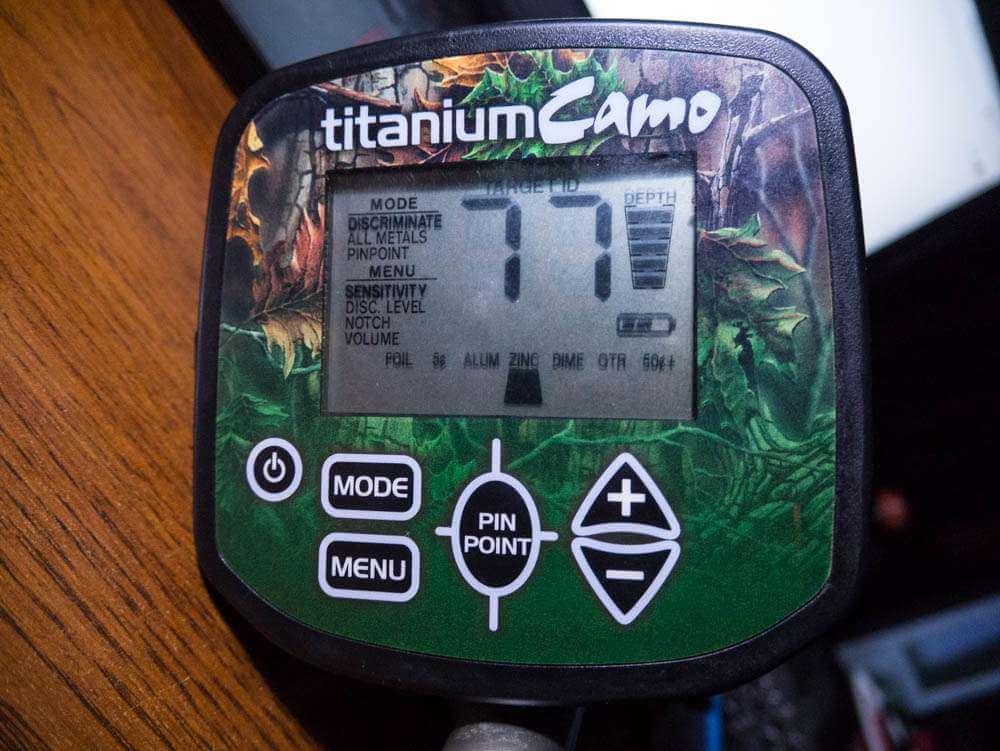
Check the voltage. 8.29V, so we can consider it fully charged. Connect it to the device.
The device shows two thirds charge.
UPDATE. After a whole day of detecting it kept showing the same two thirds. I measured the voltage directly at the cell terminals and it came to 8.2 V. I didn't even top them up; with such a "furious" consumption two cells will last me a month. I'll wait until they're completely drained and then update the article.
Thanks for reading to the end! No nails, no bottle caps (unless you're digging up nails and bottle caps, of course).




Прокомментируйте: