Is it worth buying Chinese batteries? The answer is mixed. Some are, some aren't. I ordered various Liitokala batteries for testing; this time we'll test the NCR18650B 3400 mAh pointed, and the rest can be found on the site under the Liitokala tag.
The batteries for this review were bought at Liitokala's official store. I picked the pointed format (with a protruding positive contact) only because it was on sale, but in general I recommend regular ones with a flat top. I'll explain why at the end of the article.
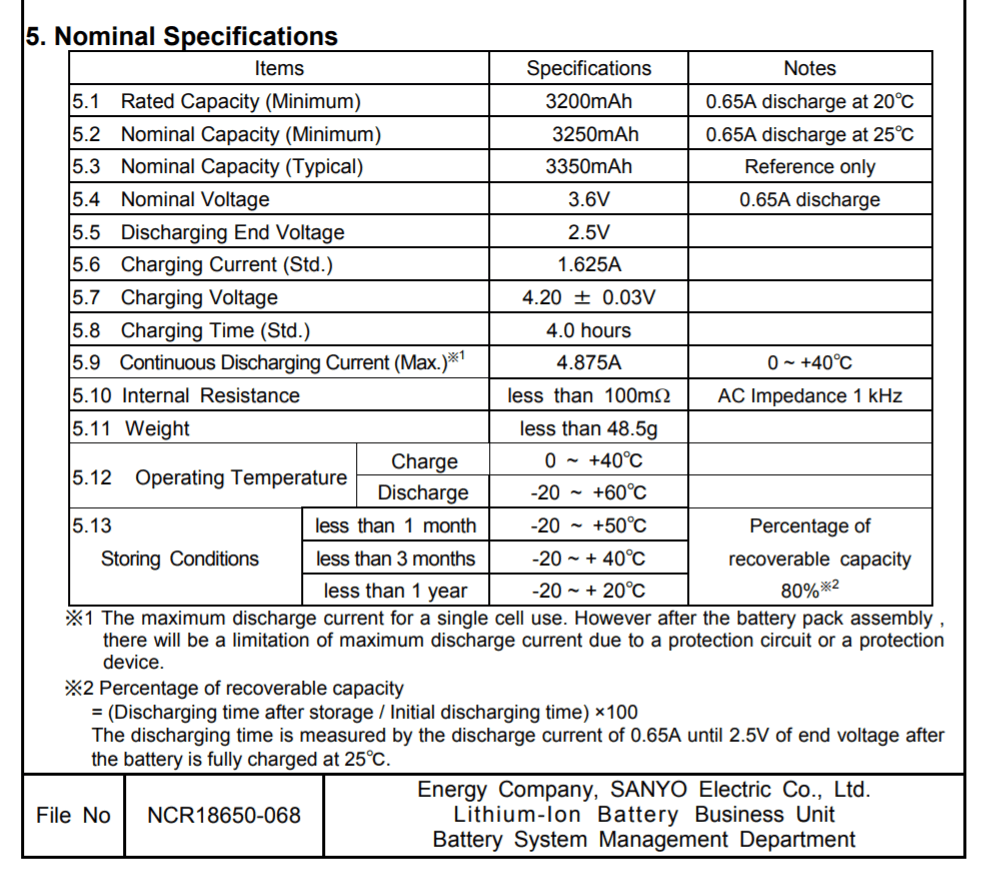
So, what specifications does the manufacturer claim?
To go easy on the batteries, I set the cutoff voltage at 2.7 V. Let's check how honestly the specifications are stated by testing the batteries at currents from 0.5A to 10A.
Four batteries were charged at 500 mA to 4.2 V and then "rested" for an hour. During that time the voltage settled at 4.185 V.
When discharged at 0.5 A, the discharge curve slopes smoothly down to 3.4 V, giving up 80% of the capacity. Then the voltage starts to fall faster, and between 3.4 and 2.7 V the battery gives up the remaining 20% of its charge. The battery's total capacity with the cutoff at 2.7V came to 3361 mAh, which not only matches the stated capacity but is a very good result overall.
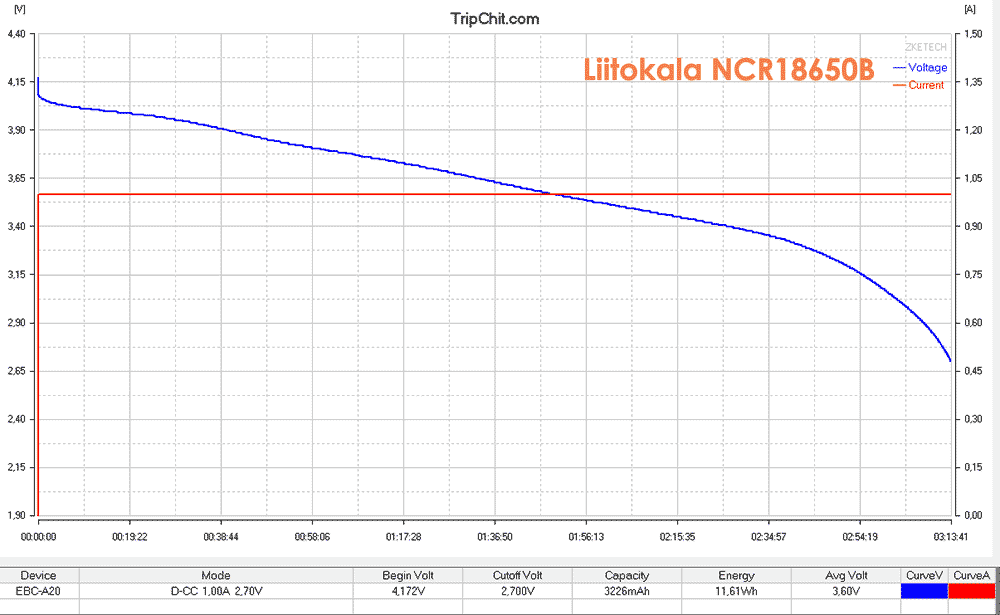
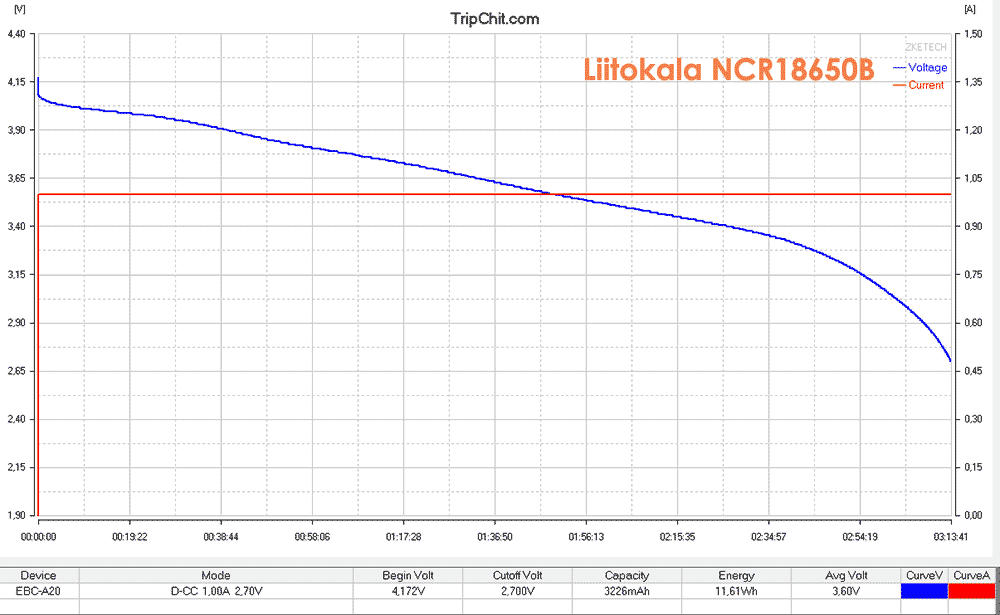
While the first battery was being tested under the 0.5A load (the test took almost 7 hours), the voltage of the second one dropped to 4.172 V.
When discharged at 1 A, the discharge curve slopes smoothly down to 3.25 V, giving up 90% of the capacity. Then the voltage starts to fall faster, and between 3.25 and 2.7 V the battery gives up the remaining 10% of its charge. The battery's total capacity with the cutoff at 2.7V came to 3226 mAh.
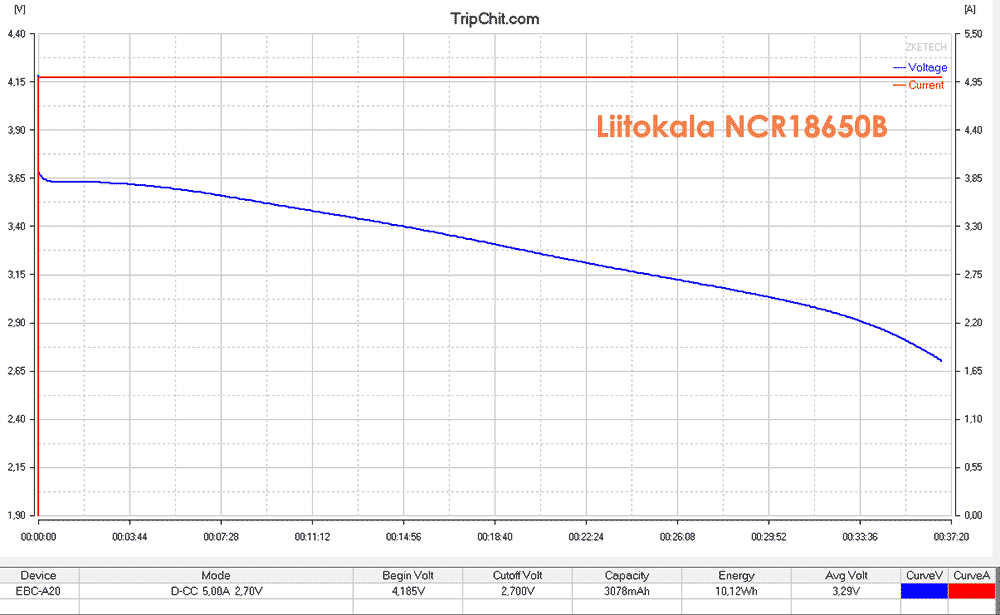
The rated continuous discharge current is 4.875 A, but I set 5A so as not to deviate from the method. Exceeding the rated current by 2% shouldn't critically affect the result.
At 5 A the discharge starts at 3.65V, and the curve slopes smoothly down almost to the 2.7V cutoff. Judging by the shape of the curve, we can assume that down to the nominal 2.5 volts the battery could have given another 100-150mAh. But even without that, the 3078 mAh obtained is an excellent result.
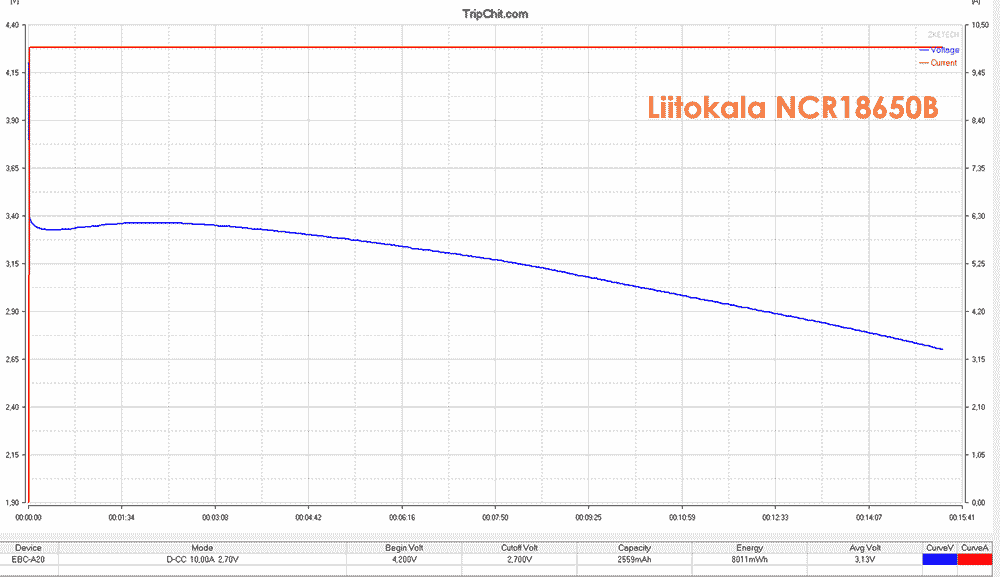
The strong voltage sag under load in the previous test clearly shows that Liitokala NCR18650B batteries are by no means high-drain. But to clear my conscience, I topped up the fourth battery and decided to test at twice the rated current.
Naturally, extra safety precautions were taken at this stage of the test, and the temperature was monitored.
At 10 A the voltage immediately dropped to 3.25 V, the battery heated up to 40 degrees and the voltage rose by 0.1V, though not for long. After that the discharge curve slopes down without dips to the 2.7V cutoff, and by then the battery had heated to 65 degrees. Even though the delivered capacity came to 2559 mAh, the substantial voltage sag and heating mean Liitokala NCR18650B batteries must not be used in this mode.
I planned to use these 18650 batteries in a homemade power bank and a metal detector, but at first they wouldn't fit any holder, and for two reasons at once. First, the protruding positive contact makes the battery almost a millimeter longer than standard. Second, Liitokala uses thick heat-shrink for its label, which increases the battery's diameter by almost half a millimeter.
So I had to "undress" these batteries. The heat-shrink with the Liitokala label came off with a knife, but the plate with the positive contact was spot-welded on. Though it was welded very neatly, so I managed to remove it without much effort too.
Under the Liitokala label hid another label, this time Panasonic NCR18650B. Judging by the specifications, this label is genuine.
No surprise there; other 18650 battery "manufacturers" do the same, for example AWT, Keeppower and the like.
The only surprising thing was the price: at the time of purchase it was a little over 2.5 dollars apiece.
So Liitokala NCR18650B batteries are recommended for purchase, only I advise getting the battery with a flat top right away, so you don't have to remove that positive tip. And the label the seller sticks on can be treated as extra shipping packaging that you peel off and throw away before use.
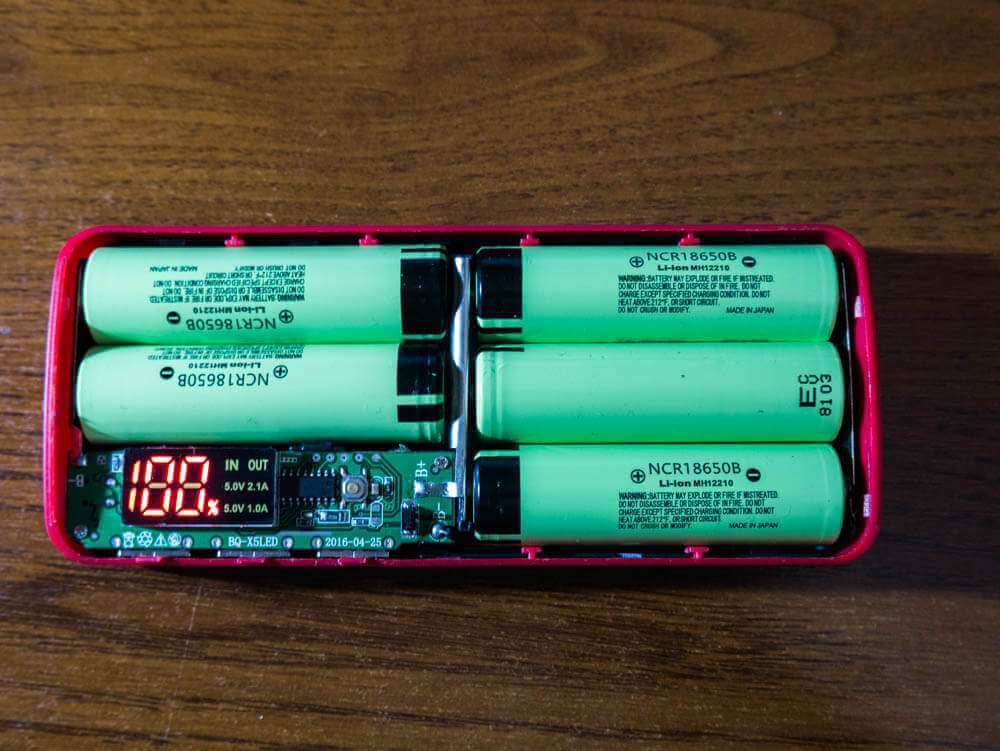
These batteries are ideal for flashlights, power banks and other relatively low-power devices that need high capacity.
One more thing: the datasheet for the original NCR18650B carries this warning: if a cell is discharged below 3 volts, it should first be charged up to that voltage at 0.32 A. After that you can charge at up to 1.625A. I'd recommend simply not discharging them that deeply. And finally, the original specifications from the cell manufacturer:
Прокомментируйте: