Today we'll talk about something every angler should have (besides a spinning rod, of course): balaclavas. For those who don't know, a balaclava is a sort of hat-mask that covers not only the crown of your head but also your cheeks, nose and neck. We'll look at the buff here too, as a headgear that combines the functions of a hat, balaclava, scarf and bandana.
What made me start the topic of autumn-winter fishing clothes was the very aggressive advertising of fishing coveralls. Having argued with the sellers, I unexpectedly structured my accumulated experience for myself and now want to share it with you. I talked about coveralls (or rather, about their uselessness) in the previous article, and here I'll talk about the winter headgear I wear fishing.
Why winter? Isn't a balaclava warm to begin with? The answer is simple. An ordinary balaclava is also called a helmet liner. That is, it protects the face and neck from cold, but a warm hat must be worn over it, because the material of an ordinary balaclava, fleece, soaks up water easily and lets the wind through. And while on the face this property helps (cheeks and nose are warmed by breath, while the steam passes through the fleece and the material dries instantly), around the crown and ears you'd want more serious protection.
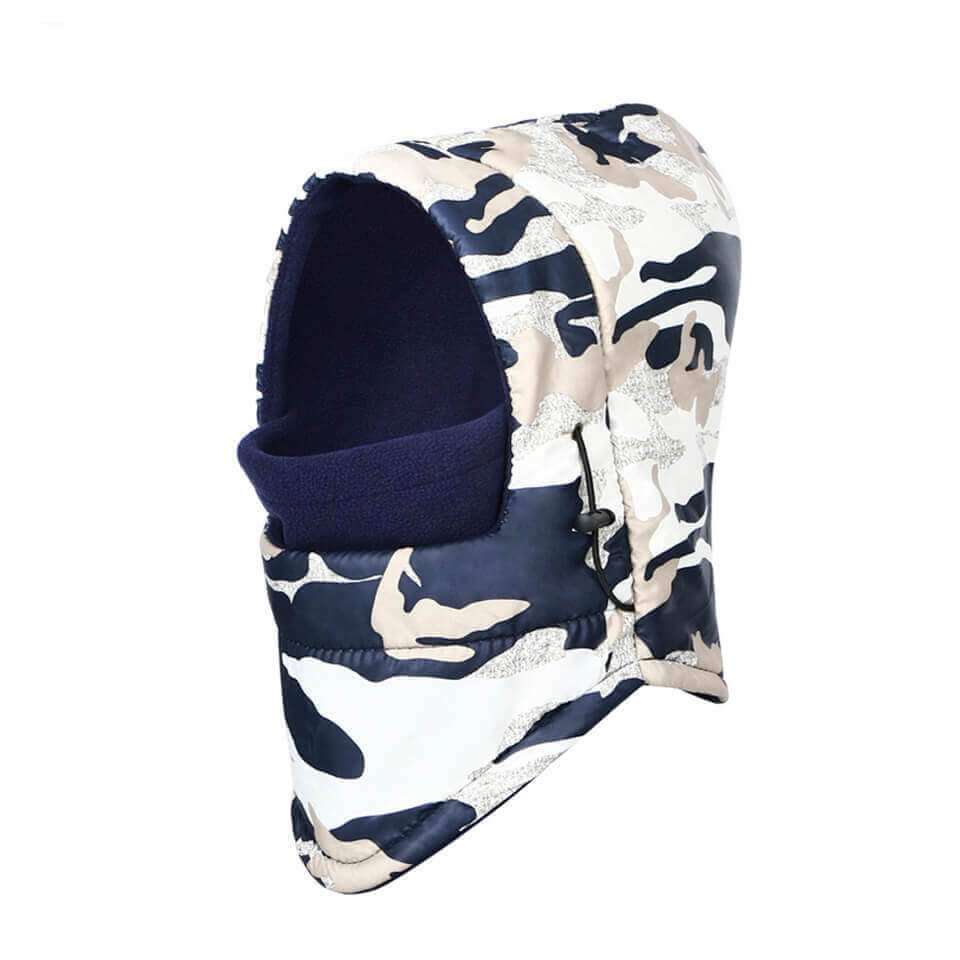
Chinese manufacturers met anglers' wishes halfway and created a winter balaclava made of two layers.
On the outside is a waterproof and windproof layer of a material called "parachute nylon". Very light and soft, and exceptionally slippery. If you tuck the bottom of the balaclava into your jacket collar, you can turn your head without any problem; the winter balaclava will slide on the collar, whatever material it's made of. This is especially relevant for bearded guys: with us an ordinary balaclava stays put when you turn your head and covers one eye.
On the inside is an exceptionally soft and comfortable microfleece, warm, which together with the windproof outer layer creates a thermos effect, while where it's needed (on the face) this layer is the only one.
All this is complemented by an elastic with clamps that changes the size of the balaclava, letting you tighten it to the size you need. When there's no wind, you can loosen the elastic; if there's wind, tighten it so it doesn't blow in. Overall, the winter balaclava is now my favorite headgear (which is exactly why I forgot it in the boat and couldn't take a photo; I'll do it on the next fishing trip).
It costs $7.50 on AliExpress. Highly recommended. It comes in 9 colors for every taste.
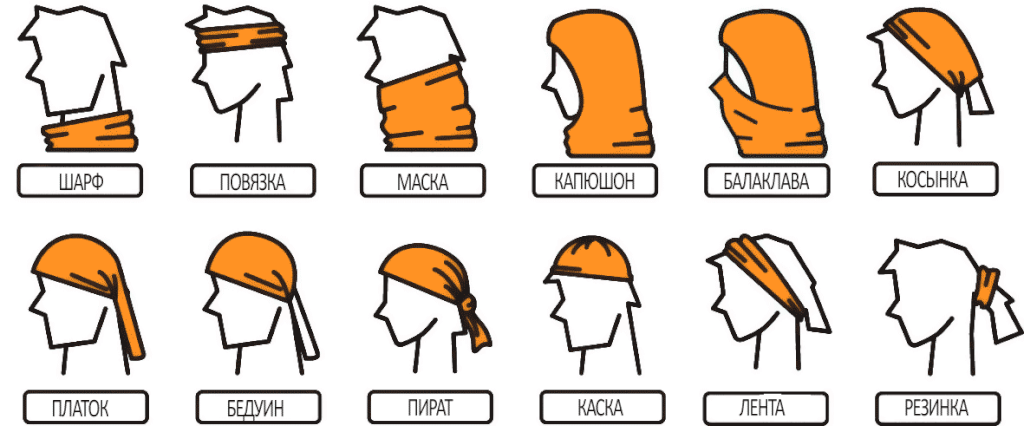
The buff is the next evolution of the balaclava. In its original form it's a long tube of thin, smooth microfleece that can be worn on the head, neck or arm in dozens of ways. Personally I know 15, though I usually use five.
The first and main way: the buff is put on the head like a hat, with the other end simply thrown back. In summer it's an excellent helmet liner, in autumn protection from a light wind. You can twist the other end and pull it back onto the head, and then you have a two-layer hat with a closed top that will protect from cold wind too. The buff can simply be worn on the neck like a scarf. Or you can put your head through and pull the lower part up over your face, and then it's a light balaclava. And most important of all: the buff is very light and compact, so it can be worn all year round; if it's really hot, on the arm like a bracelet, and if it's really cold, as an extra layer under a hat. Even such a seemingly minor addition will protect your ears and add comfort to your winter fishing.
It costs under two dollars on AliExpress. An essential item in an angler's wardrobe. I have five of them.
Прокомментируйте: