How I bought an inexpensive backpack for a metal detector and a Fiskars shovel
A sturdy and comfortable backpack that holds a metal detector, shovel, pinpointer, knife, multitool, spare batteries, a raincoat, swim trunks, a towel and lots of other necessary things is an extremely useful item. I'll tell you why I needed a backpack for a metal detector and shovel.
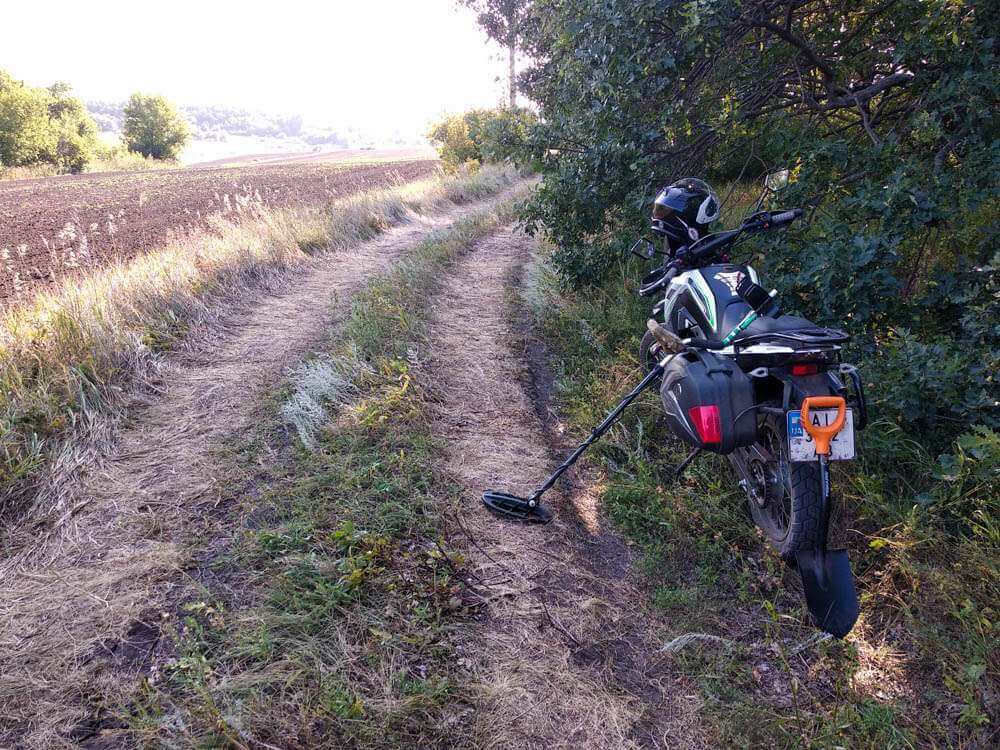
I used to go detecting by car. I carried the detector in the trunk without even taking it apart, and the big Fiskars Solid shovel rode there too. The car has a big trunk, so I didn't think about compactness. But then I bought a motorcycle and it became clear that it gives fantastic mobility. On a motorcycle I can get to places a car can't reach, and reach any spot within 30 km of the city in half an hour. In any direction. I can ride forest trails or cut straight across a field. And when Lera gave me a compact shovel, it became clear that the only thing between me and being able to go "beeping" any time was the lack of a convenient way to carry the shovel and detector.
I started looking for a backpack. It turned out that the original backpacks, although they cost half as much as the device, have no place for a shovel. Homemade backpacks and products of local firms also cost around $100 and aren't free of flaws either. Remembering my favorite saying, "everything a person could need has already been invented and is sold on AliExpress", I went to look there. A direct search gave no results. I had to search by size.
The Fiskars small shovel is 83 cm long. So an 85 cm backpack is what I need.
Better already: duffel-style training backpacks started turning up. In theory such a backpack would have done for me too, but it had no pockets or compartments for small stuff. So I kept at it stubbornly and found this!
A great backpack for a hunting carbine for 27 dollars. Made of Cordura, with 5 pockets of various sizes and 2 large compartments, just right for a shovel and a detector.
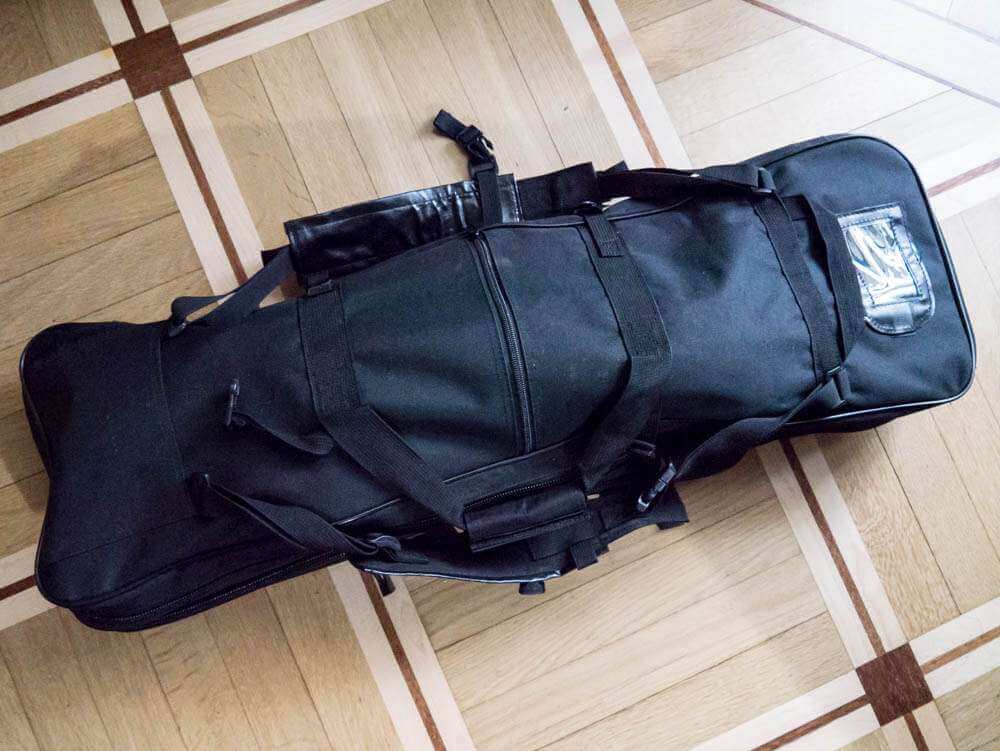
Will a hunting carbine backpack suit a metal detector? Of course! First, its walls are rigid enough to protect a firearm from damage, which is a huge plus for an electronic device as well. Second, inside there are Velcro straps for securing the carbine, and why is a shovel any worse than a carbine? It's better! I ordered the 85 cm backpack and the Fiskars fits perfectly. I chose black. On khaki the dust and dirt that come with our hobby show less, but that's a matter of personal preference.
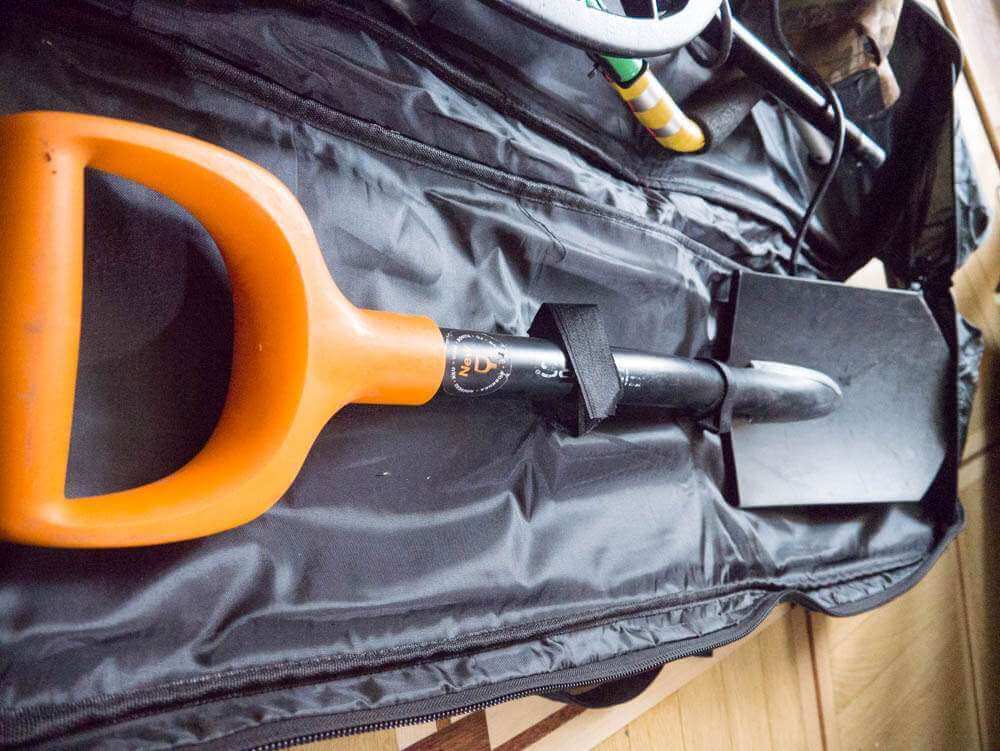
If I don't have far to go, I simply fold the device, splitting the shaft into two parts, into the compartment together with the shovel. Throw it over the shoulder and ride off. Stop, open the backpack, take out the shovel, then the detector, snap the shaft together and go swing it. Quick and tidy.
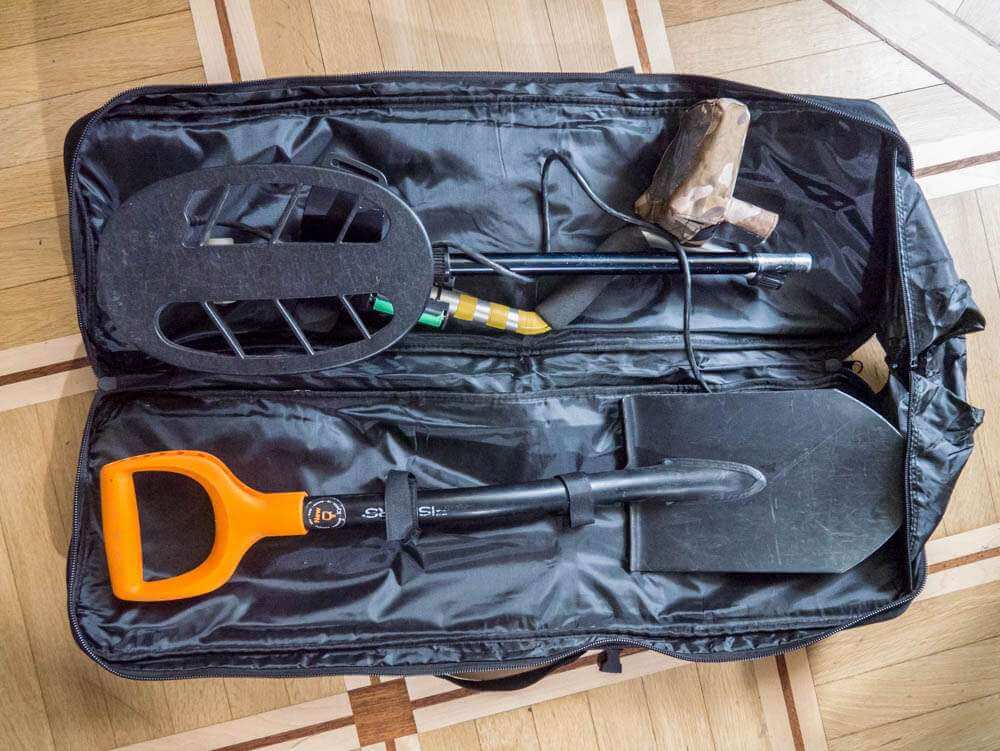
If the trip is long and far, you need to secure everything well. That takes five minutes more: the metal detector has to be taken apart. The shovel is held rigidly by two Velcro straps in the large compartment, and it has a curve that follows the curve of the back, so it won't get in the way on the ride. One of the shaft parts can go in there too. The coil and the upper shaft go in the middle compartment. The armrest has protrusions, but we won't feel them: between them and your back are the shovel, two layers of foam and four layers of Cordura.
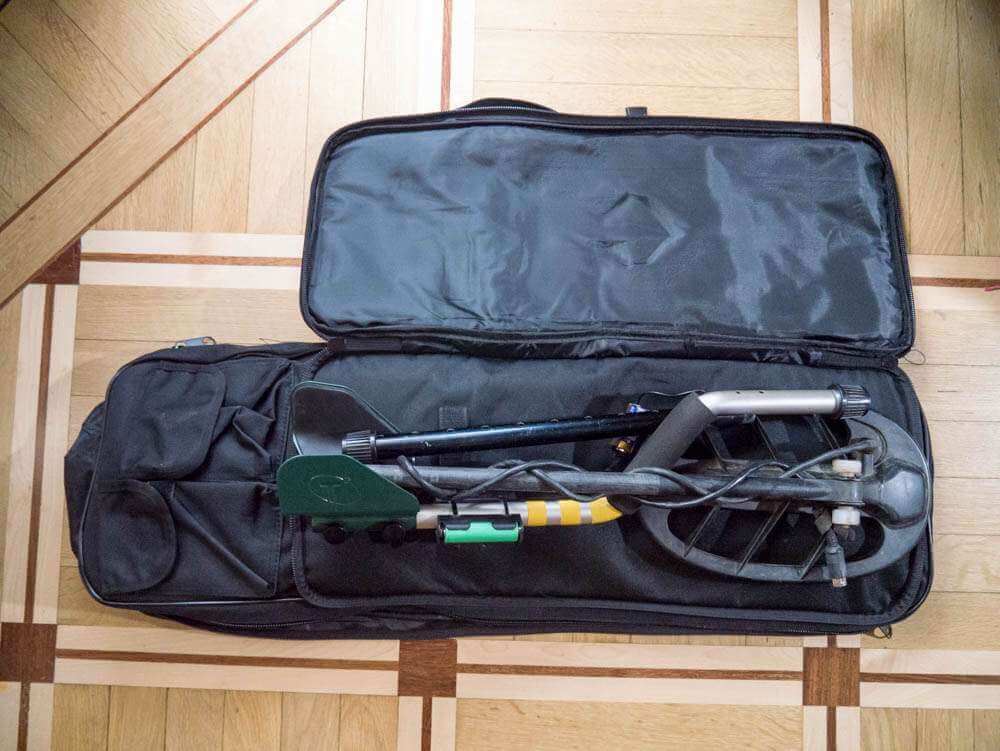
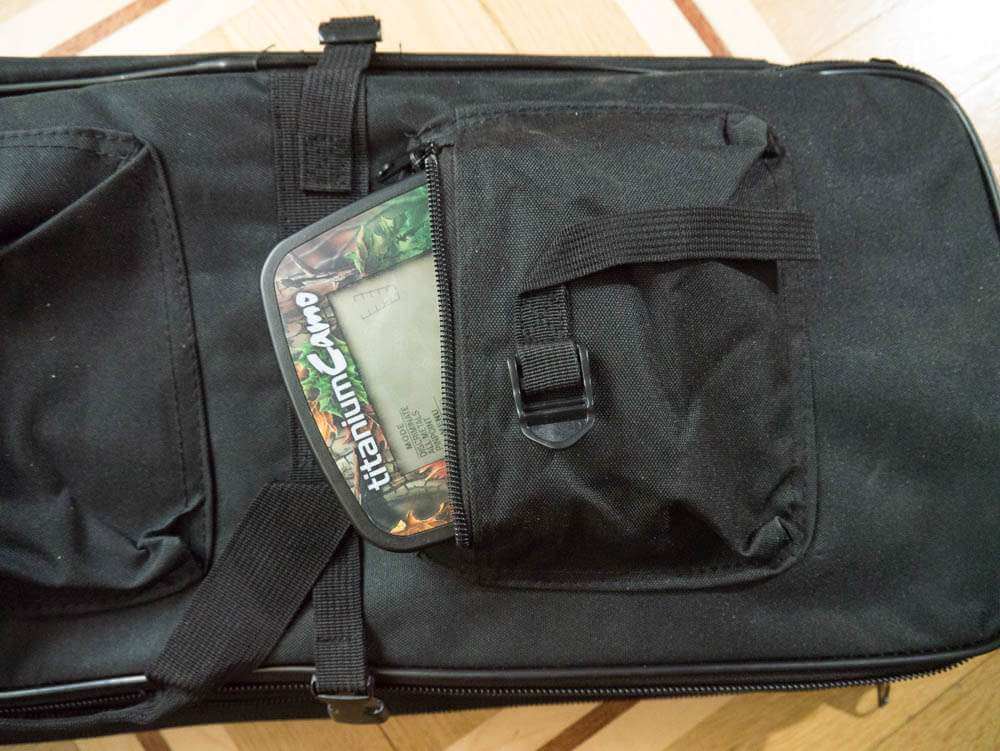
And we take off the device's "head" and put it in a separate pocket. The pocket was originally meant for ammunition boxes and magazines, but that doesn't bother us. We have two such pockets, plus two smaller pockets on top (I carry a towel, swim trunks and a set of tools in them), and one more large pocket the full width along the back. You can put a sheet of foam mat in there and then you won't feel at all that you have anything on your back.
Now the downsides, how could we do without them.
The backpack straps are very short, and I have size 60 shoulders. It's a serious minus, but as it turned out, you can get rid of it in five minutes without any tools, needles, thread or extra spending. I suspect that's how it was meant to be, but the manufacturer forgot to mention it.
So, the straps are short, but they're on double loops that can be made single, doubling the length. For that you need buckles. Finding two plastic buckles is practically impossible, but the manufacturer thought of us and provided extra straps for fastening the shoulder straps together. They're needed on hiking backpacks but are completely useless for ours.
A metal detector weighs about a kilogram, the shovel 1.4 kg, and even with a pinpointer, spare batteries, tools and found artifacts the backpack will weigh about four kilos. That's not a weight that's worth distributing in any special way with extra straps.
So we calmly detach these straps, take the buckles off them, and then fit the buckles on the lower part of the backpack's shoulder straps. That's it: the backpack has no minuses, only pluses.


Thanks for stopping by the site. You can also read how I converted a metal detector to run on 18650 cells (three months on a single charge), and I'm off to the field to look for aurei. Good signals, everyone!